Because of Her We Can: Elizabeth Jarrett

Throughout the next few days, over NAIDOC week celebrations, I will be posting a series of photographs of just some of the Aboriginal and Islander women who I admire and respect, who I have photographed over the years, and who epitomize this year's NAIDOC motto, 'Because of Her We Can'.

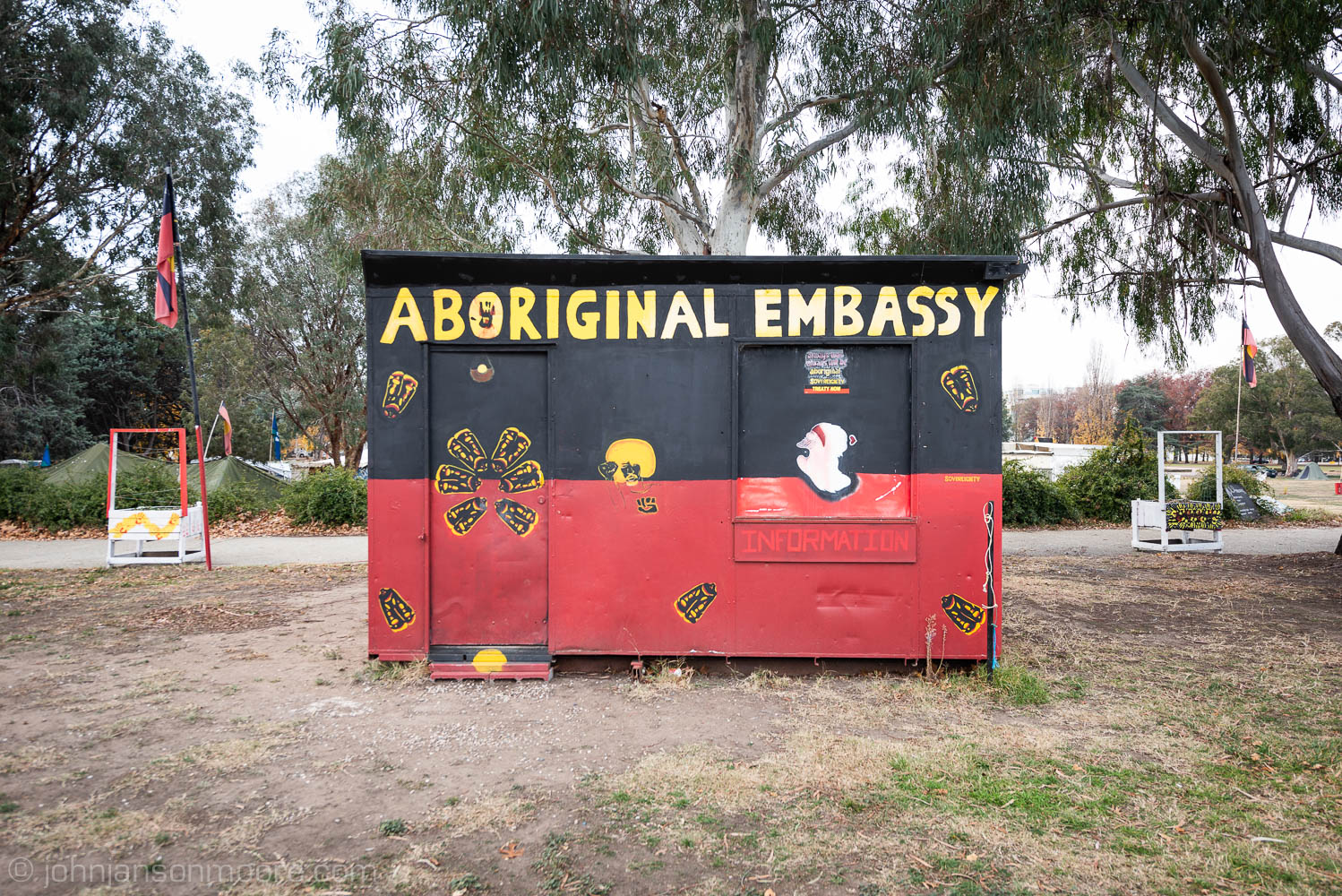
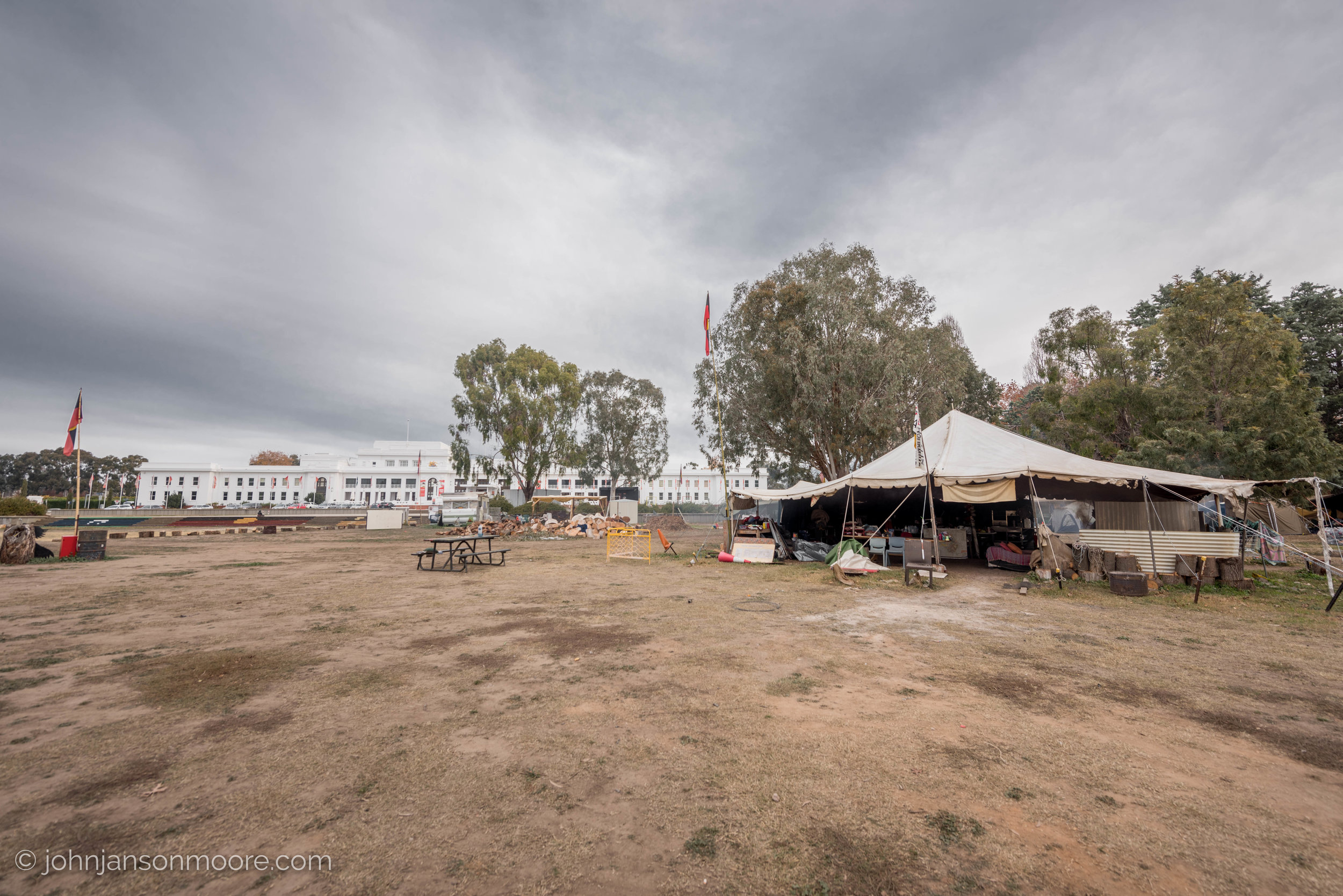
Today, I am posting a photograph of Gumbaynggirr Dunghutti Bundjalung woman, mother, activist and poet, Elizabeth Jarrett and her son, at the Aboriginal Tent Embassy in Canberra.

In the portrait below, Elizabeth and her son are wearing T-Shirts demanding justice for David Dungay, whose prison cell in Long Bay Jail was stormed in 2015 after he refused to stop eating a packet of biscuits. David suffered from diabetes. Prison officers restrained and sedated Mr Dungay. He died soon after.

A coronial inquiry will commence next Monday, the 16th of July, to investigate the circumstances around David Dungay's death. Family and supporters, including Elizabeth Jarrett, will be gathering at the inquiry to highlight ongoing Aboriginal deaths in custody and to ensure the courts understand that attention is being focussed on the proceedings.

* click on image for full screen view

Because of Her We Can: Kayleedah Hippi

Throughout the next few days, over NAIDOC week celebrations, I will be posting a series of photographs of just some of the Aboriginal and Islander women who I admire and respect, who I have photographed over the years, and who epitomize this year's NAIDOC motto, 'Because of Her We Can'.

Today, I am posting a photograph of Kayleedah Hippi, a young woman from the small town of Boggabilla, in north western NSW, on Gomeroi country.

Many young Aboriginal women are the future leaders of community and are increasingly attaining high levels of achievement on many levels, including academically, in business, culturally, on the sports field, and in the community, despite facing ongoing obstacles, such as lack of opportunities, racism and discrimination.

Below, a portrait of Kayleedah at home, Boggabilla - part of the series 'On Gomeroi'.

* click on image for full screen view

Because of Her We Can: Nancy Yukuwal McDinny

Throughout the next few days, over NAIDOC week celebrations, I will be posting a series of photographs of just some of the Aboriginal and Islander women who I admire and respect, who I have photographed over the years, and who epitomize this year's NAIDOC motto, 'Because of Her We Can'.

Today, I am posting a portrait of elder, activist and artist, Nancy Yukuwal McDinny, a Garrwa woman from the Gulf of Carpentaria region.

For the past number of years, she has been leading the fight against mining giant, Glencore, and its expansion of the McArthur River mine, one of the biggest zinc, lead and silver mines in the world. The mine has been blamed for poisoning the river that several Aboriginal communities, including the nearby town of Borroloola, rely on. Further protests are planned around the country in the near future.

*click on image for full screen view

Because of Her We Can: Lynda-June Coe

Throughout the next few days, over NAIDOC week celebrations, I will be posting a series of photographs of just some of the Aboriginal and Islander women who I admire and respect, who I have photographed over the years, and who epitomize this year's NAIDOC motto, 'Because of Her We Can'.

Today, I am posting a portrait of Lynda-June Coe, a Wiradjuri and Torres Strait Islander woman from Erambie, Cowra NSW. Lynda is at the forefront of a wave of young, powerful Aboriginal women activists demanding justice and rights for Aboriginal peoples. She is a representative of FISTT, Fighting in Solidarity Towards Treaties.

Lynda is pictured below outside the studios of Channel 7 protesting against the Sunrise program, which broadcast views arguing for the removal of Aboriginal children from their families - in effect, a second stolen generation. The Sunrise program is currently being investigated by the Australian Communication and Media Authority (ACMA).

*click on image for full screen view

Because of Her We Can: Marianne Yoorgabilya MacKay

Throughout this week's NAIDOC celebrations, I will be posting a series of photographs of just some of the Aboriginal and Islander women who I admire and respect, who I have photographed over the years, and who epitomize this year's NAIDOC motto, 'Because of Her We Can'.

Today, I am posting a portrait of Marianne MacKay, Yoorgabilya woman from the Nyoongar nation, pictured here outside Parliament House in Canberra, protesting on Invasion Day, the 26th of January, 2015. 

*click on image for full screen view

Because of Her We Can: Simone Davison

Over the next few days leading up to NAIDOC celebrations, I will be posting a series of photographs of just some of the Aboriginal and Islander women who I admire and respect, who I have photographed over the years, and who epitomize this year's NAIDOC motto, 'Because of Her We Can'.

Today, I am posting my new portrait work of Ngarigo woman and actor, Simone Davison.

*click on image for full screen view

Because of Her We Can: Gwenda Stanley

Over the next few days leading up to NAIDOC celebrations, I will be posting a series of photographs of just some of the Aboriginal and Islander women who I admire and respect, who I have photographed over the years, and who epitomize this year's NAIDOC motto, 'Because of Her We Can'.

Today, I am posting a portrait of Gwenda Stanley, Gomeroi woman, activist and cultural ambassador, teacher and dancer.

Below is an image taken at the 'Stop The Closure of Aboriginal Communities' rally in 2015, where thousands of people protested against the forced closure of Aboriginal communities, especially in Western Australia and the Northern Territory.

*click on image for full screen view

Because of Her We Can: Patricia Corowa

Over the next few days leading up to NAIDOC celebrations, I will be posting a series of photographs of just some of the Aboriginal and Islander women who I admire and respect, who I have photographed over the years, and who epitomize this year's NAIDOC motto, 'Because of Her We Can'.

Today, I am posting a portrait of salt-water Murroona and South Sea Islander, Patricia Corowa, a long time activist and a seminal figure in the Australian Black Panther, pan-African and pan-Pacific Islander movements of the  1960s and 1970s.

Patricia was also instrumental in the recent protests against the NSW Government's sell off of public housing at the historic Millers Point in Sydney.

Below is a portrait of Patricia Corowa at her Millers Point home in 2016, at the height of community protests against the re-development of the area to make way for a giant casino built by Australia's richest man, James Packer.

*click on image for full screen view

Because of Her We Can: Aunty Jenny Munro

Over the next few days leading up to NAIDOC celebrations, I will be posting a series of photographs of just some of the Aboriginal and Islander women who I admire and respect, who I have photographed over the years, and who epitomize this year's NAIDOC motto, 'Because of Her We Can'.

Today, I am posting a portrait of Wiradjuri elder and activist, Aunty Jenny Munro. 

Aunty Jenny Munro has led a life-time of agitating for rights for Aboriginal people. She led an almost 2-year long campaign for housing for low-income Aboriginal families at 'the Block' under the guise of the Redfern Aboriginal Tent Embassy. In 2015, she was honoured with the Eddie Mabo Award for Social Justice.

Below, Aunty Jenny looks out towards the setting sun on a warm autumn day at the the Redfern Aboriginal Tent Embassy, 2015.

*click on image for full screen view

Because of Her We Can: Barbara McGrady

Over the next few days leading up to NAIDOC celebrations, I will be posting a series of photographs of just some of the Aboriginal and Islander women who I admire and respect, who I have photographed over the years, and who epitomize this year's NAIDOC motto, 'Because of Her We Can'.

Today, I am posting a portrait of Gomeroi Murri Yinaar photojournalist and human rights award winner, Barbara McGrady.

Barbara will be holding an exhibition of her own photos at the Redfern Community Centre from the 9th of July 2018, as a part of NAIDOC.

*click on image for full screen view

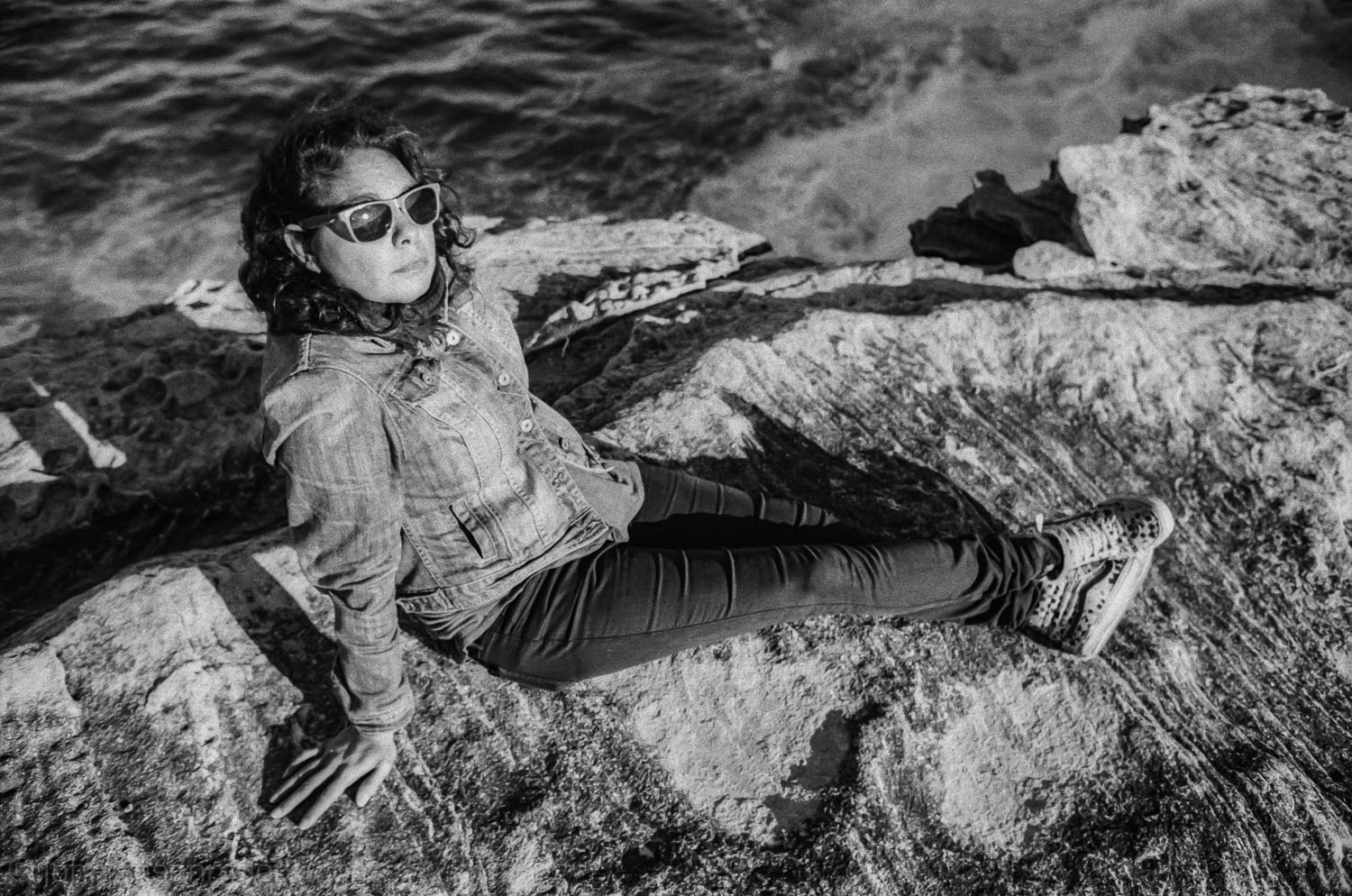
Kim

My beautiful sister, Kim.

35mm Tri-X, black and white film.

* click on image for full screen view
Vittorio

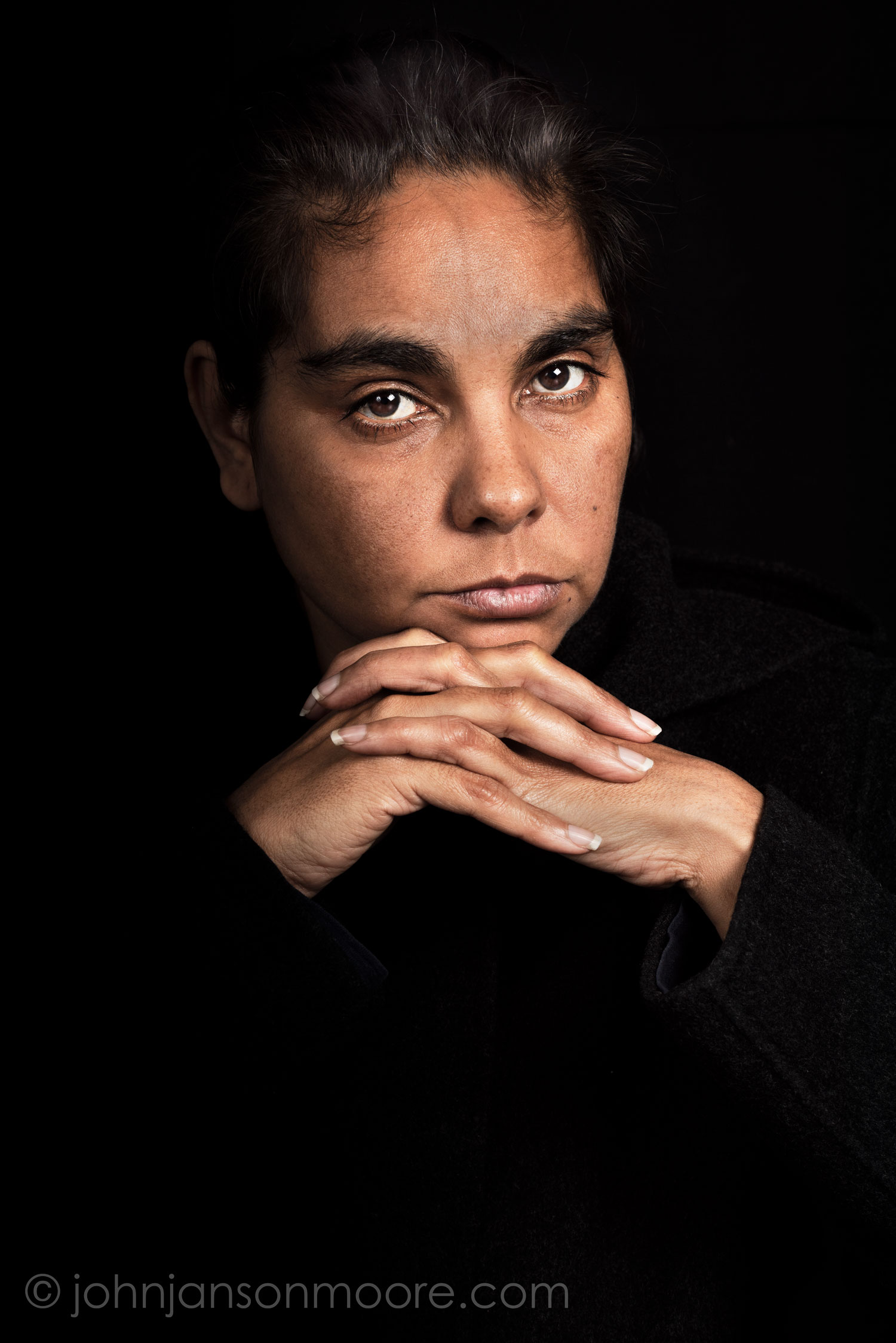
Vittorio Bianche, legend of the Piccolo Bar, the oldest still existing cafe in Sydney, Kings Cross.

35mm Tri-X, black and white film.

* click on image for full screen view

Barbara McGrady - Customs House

Impromptu portraits of Gomeroi Yinnah photojournalist, Barbara McGrady at Customs House, Sydney.

35mm Tri-X Black and White film.

*click through images for full screen view

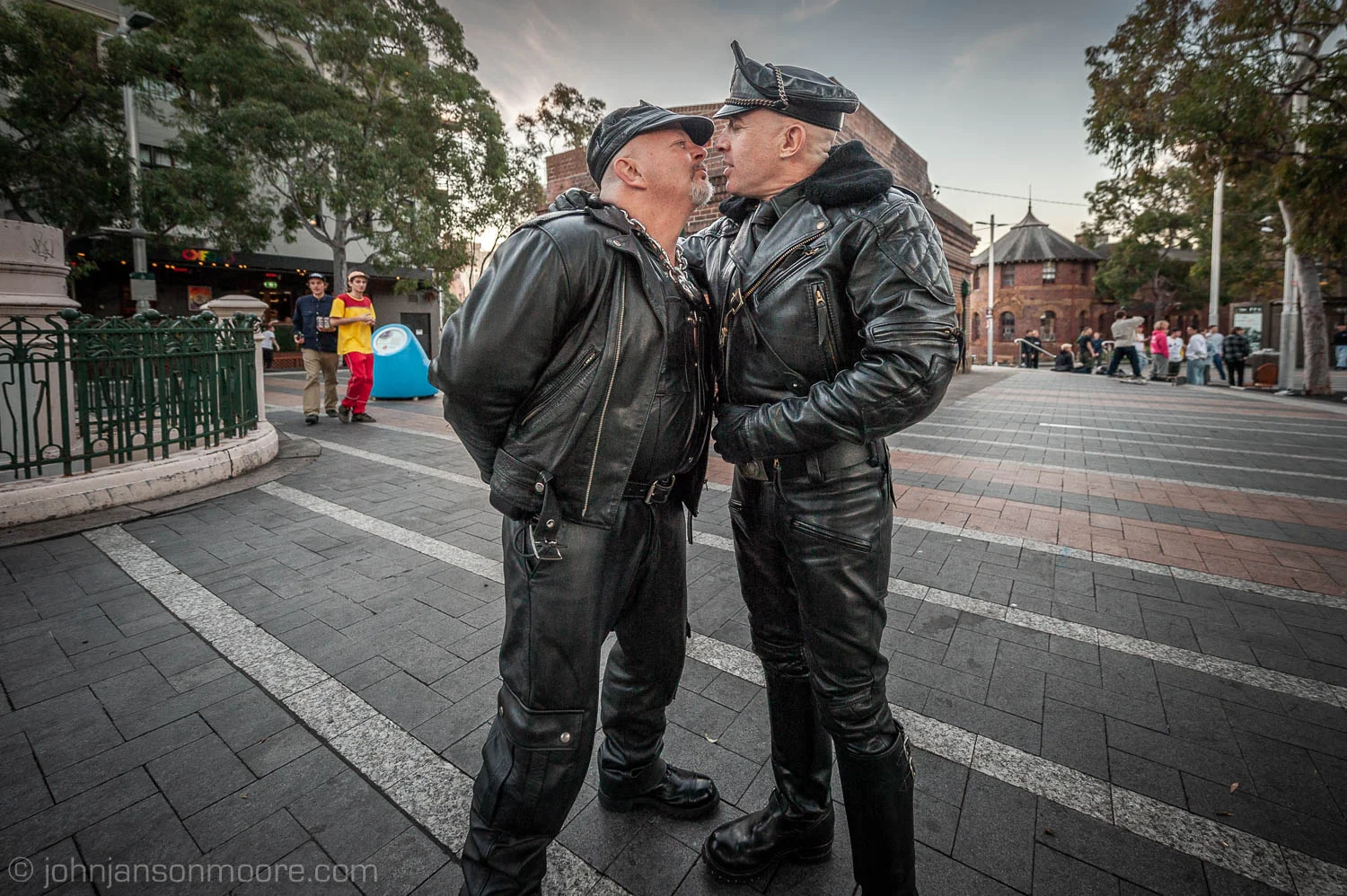
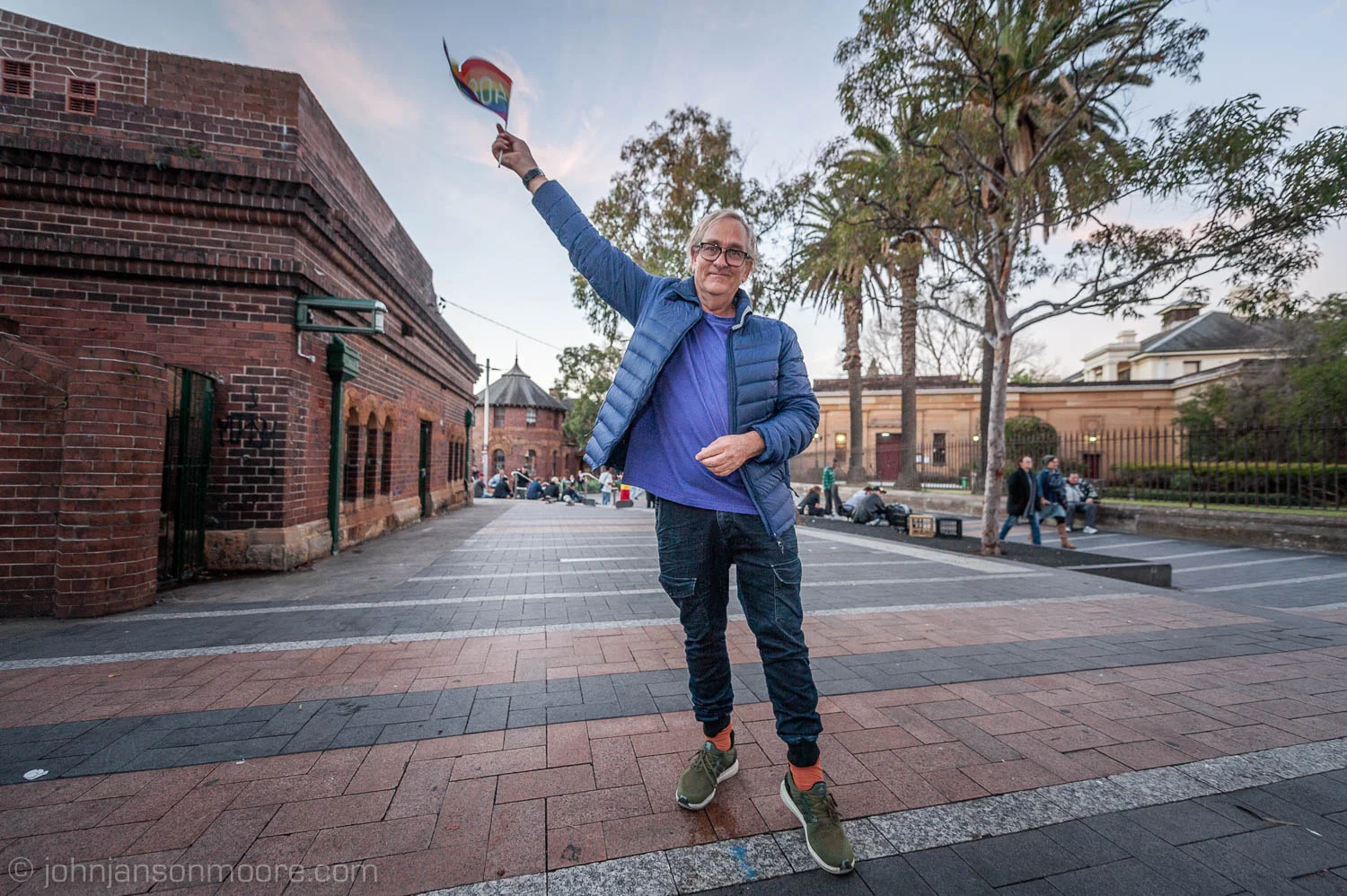
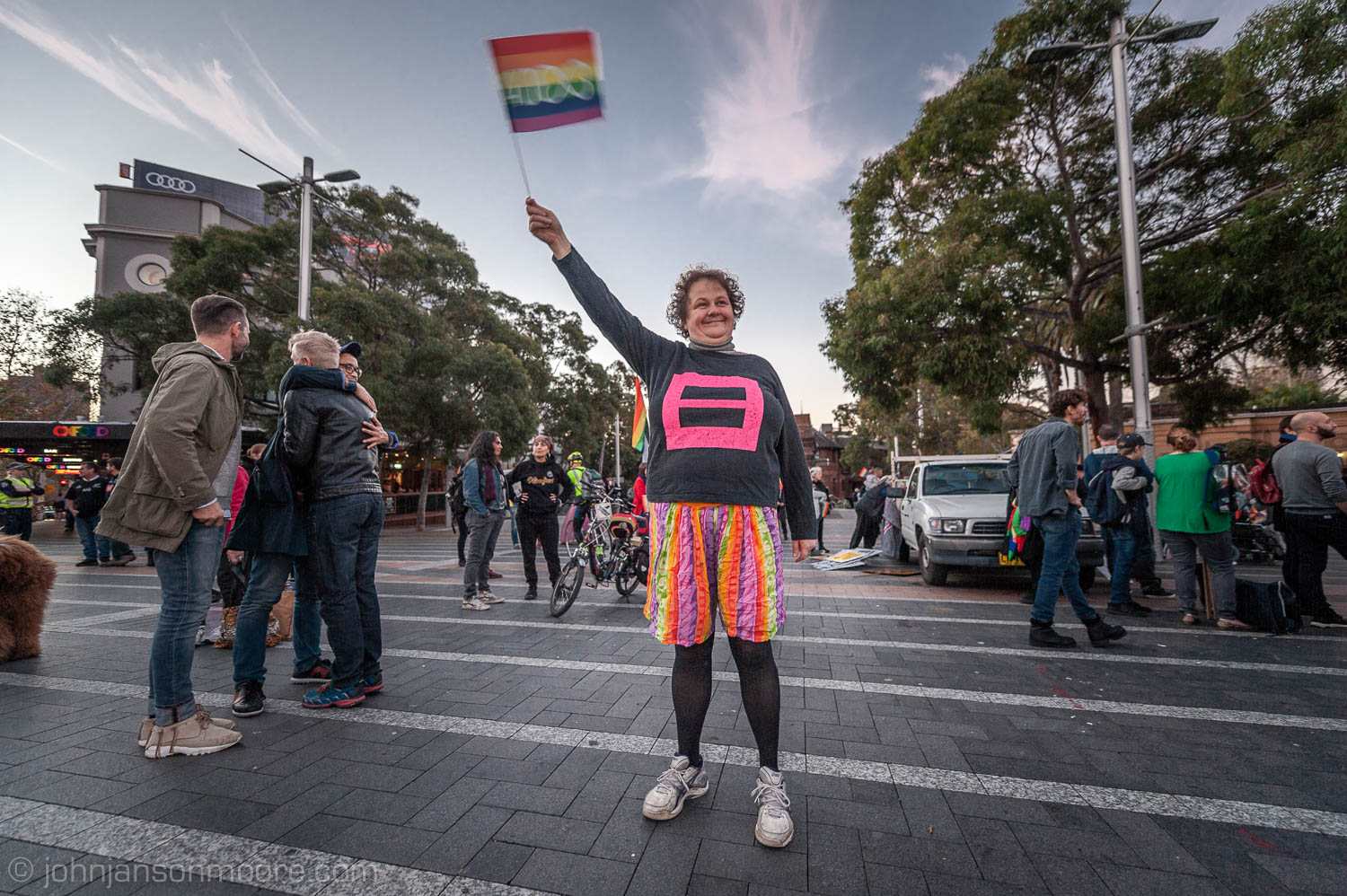
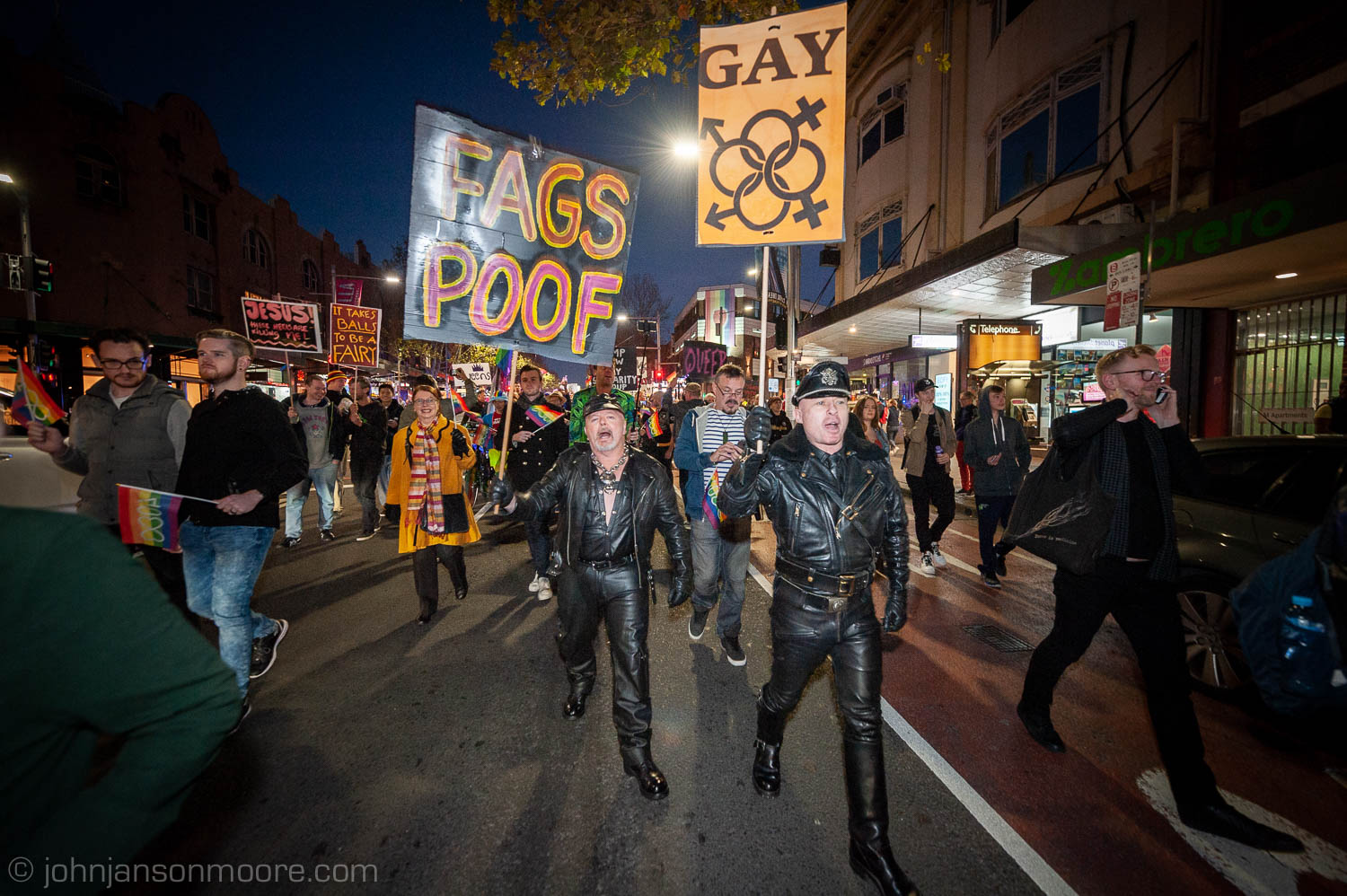
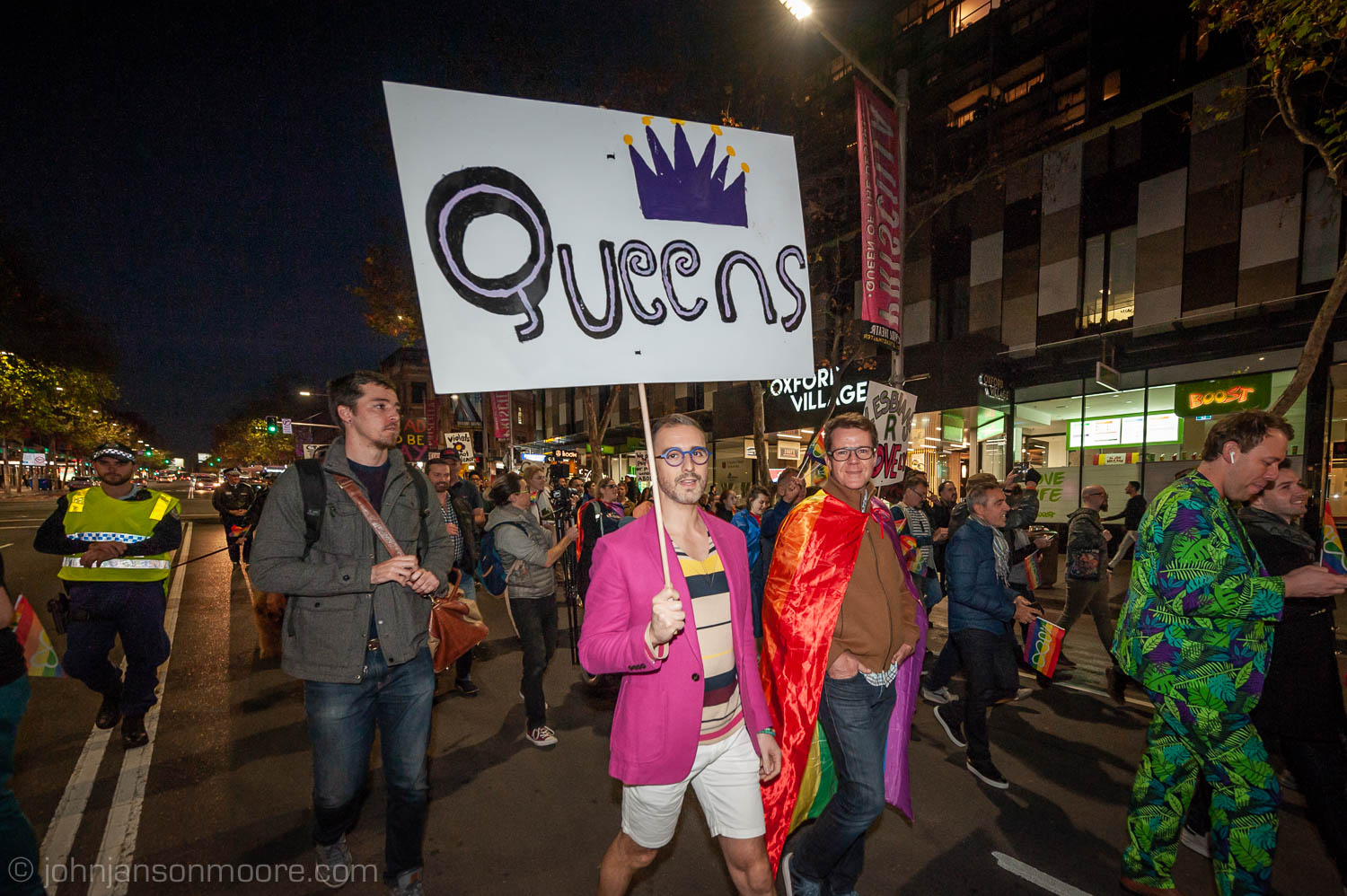
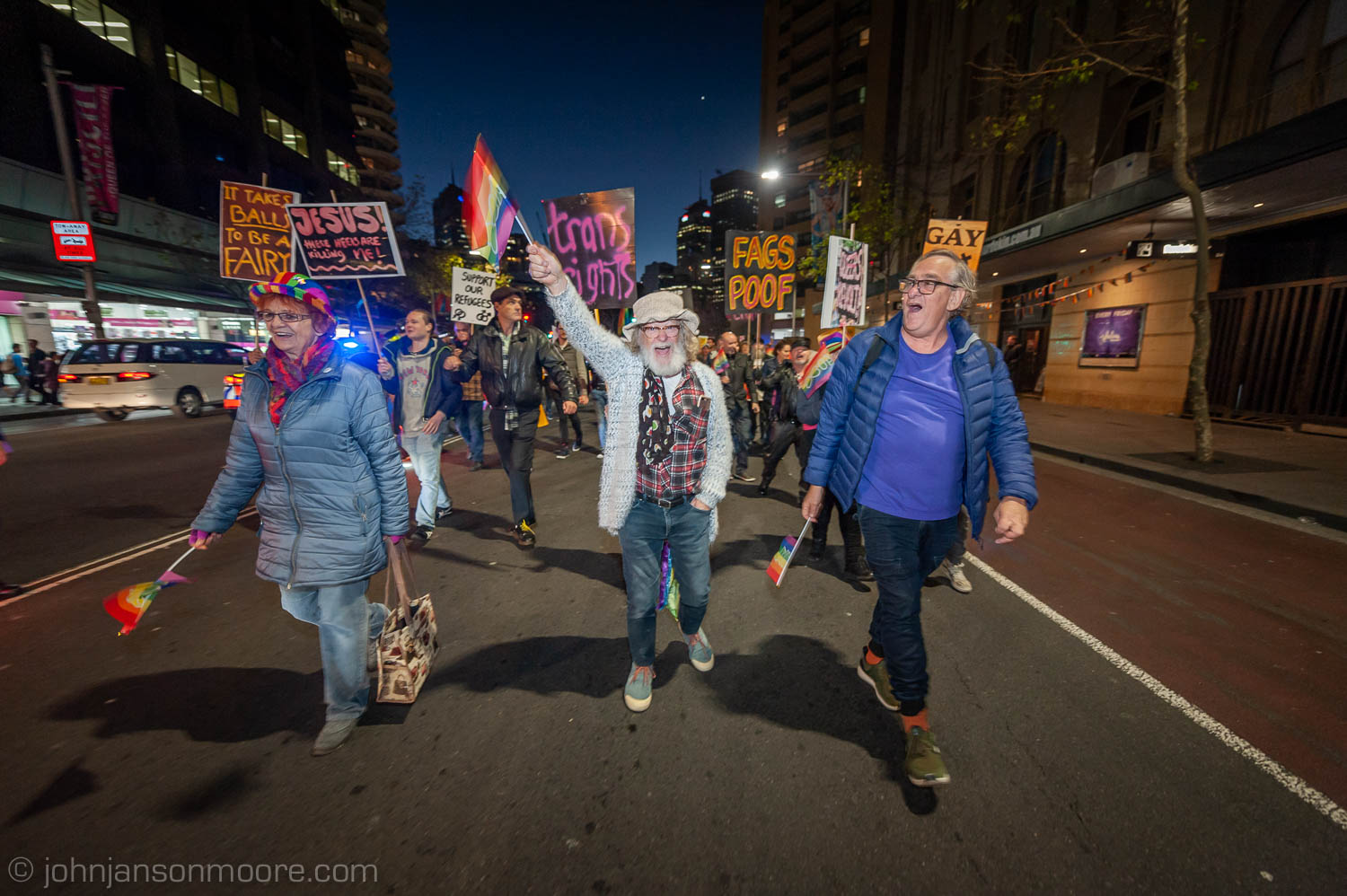
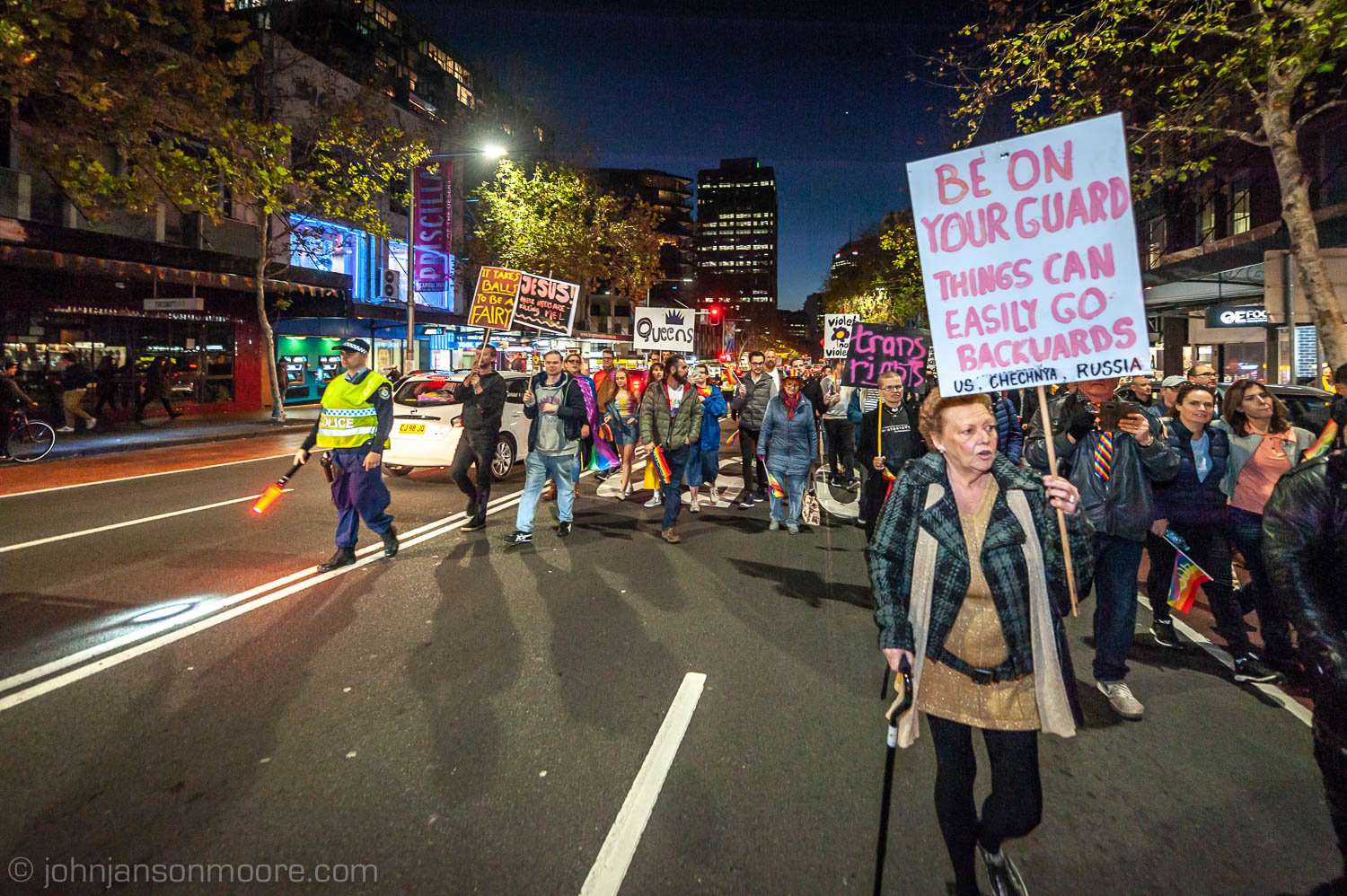
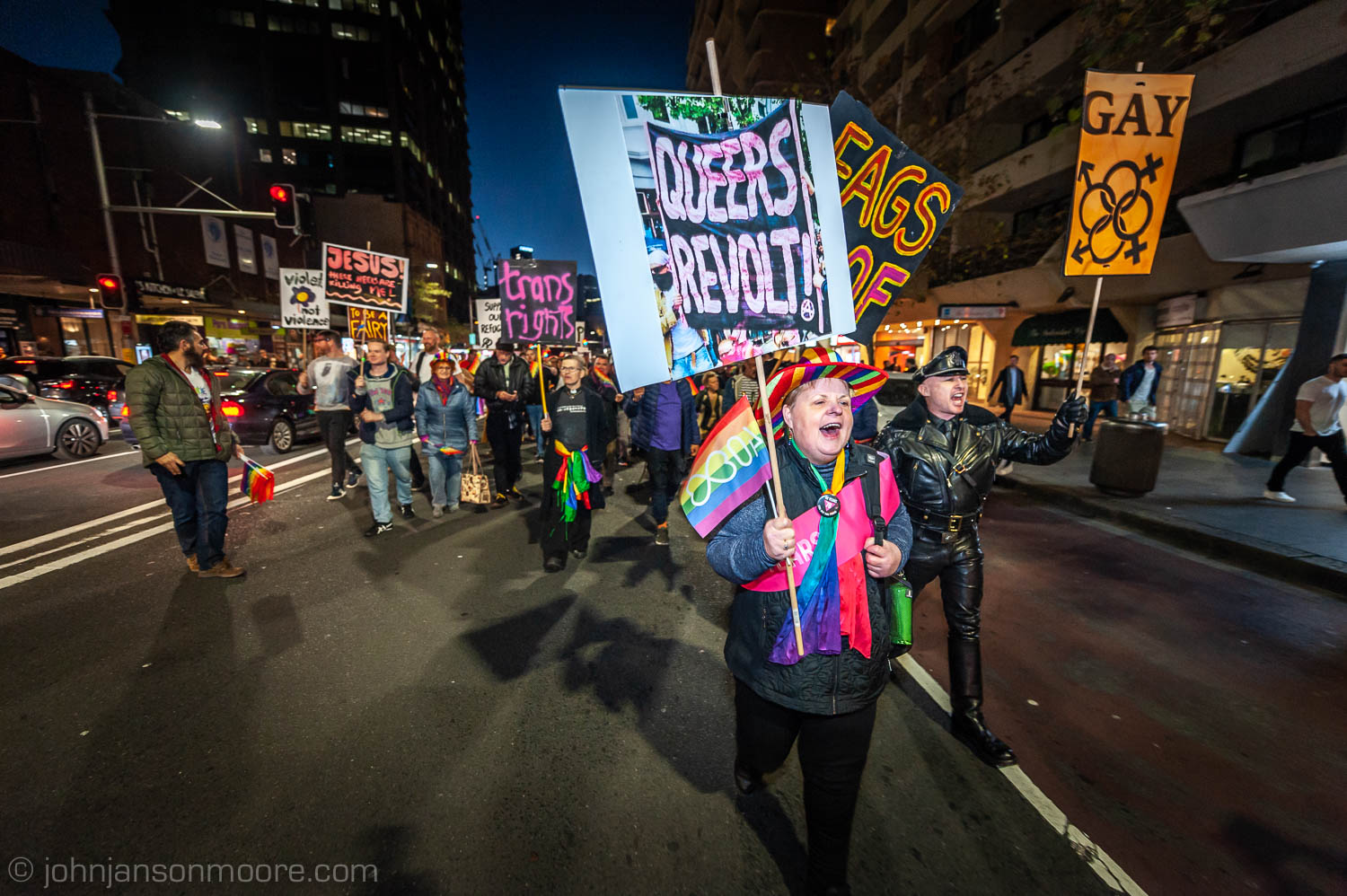
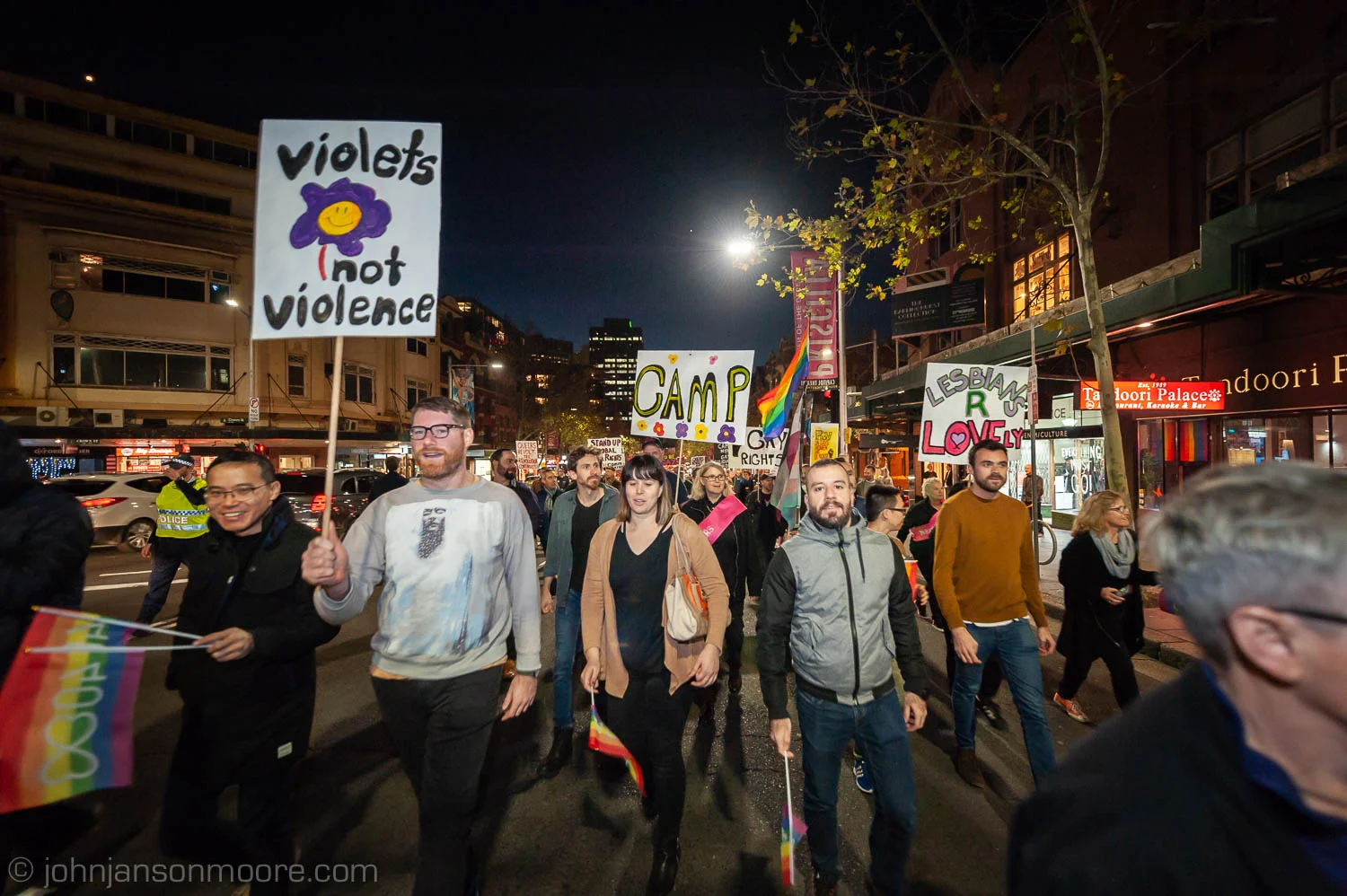
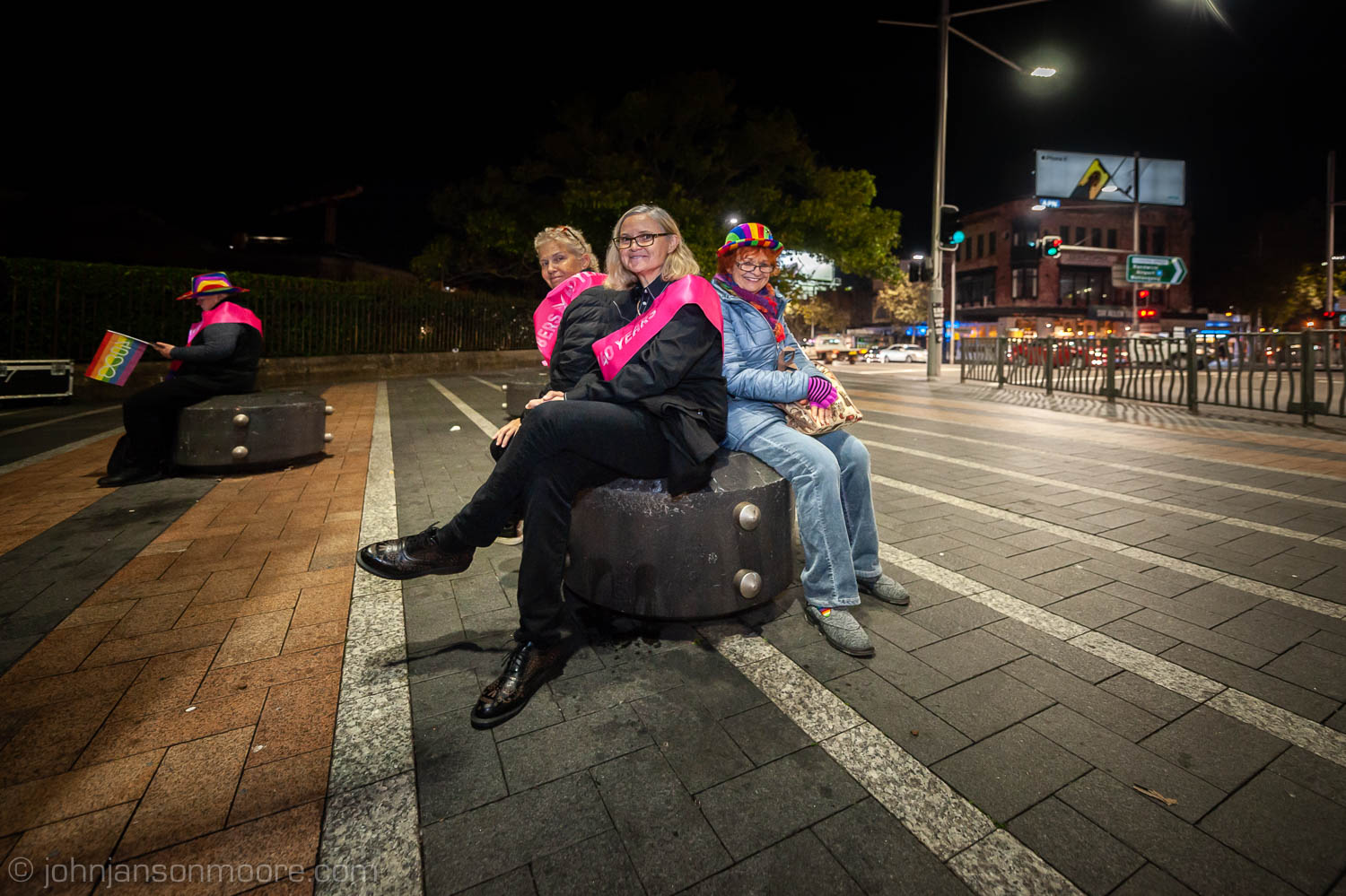
Re-enactment of the 1978 Gay and Lesbian Mardi Gras

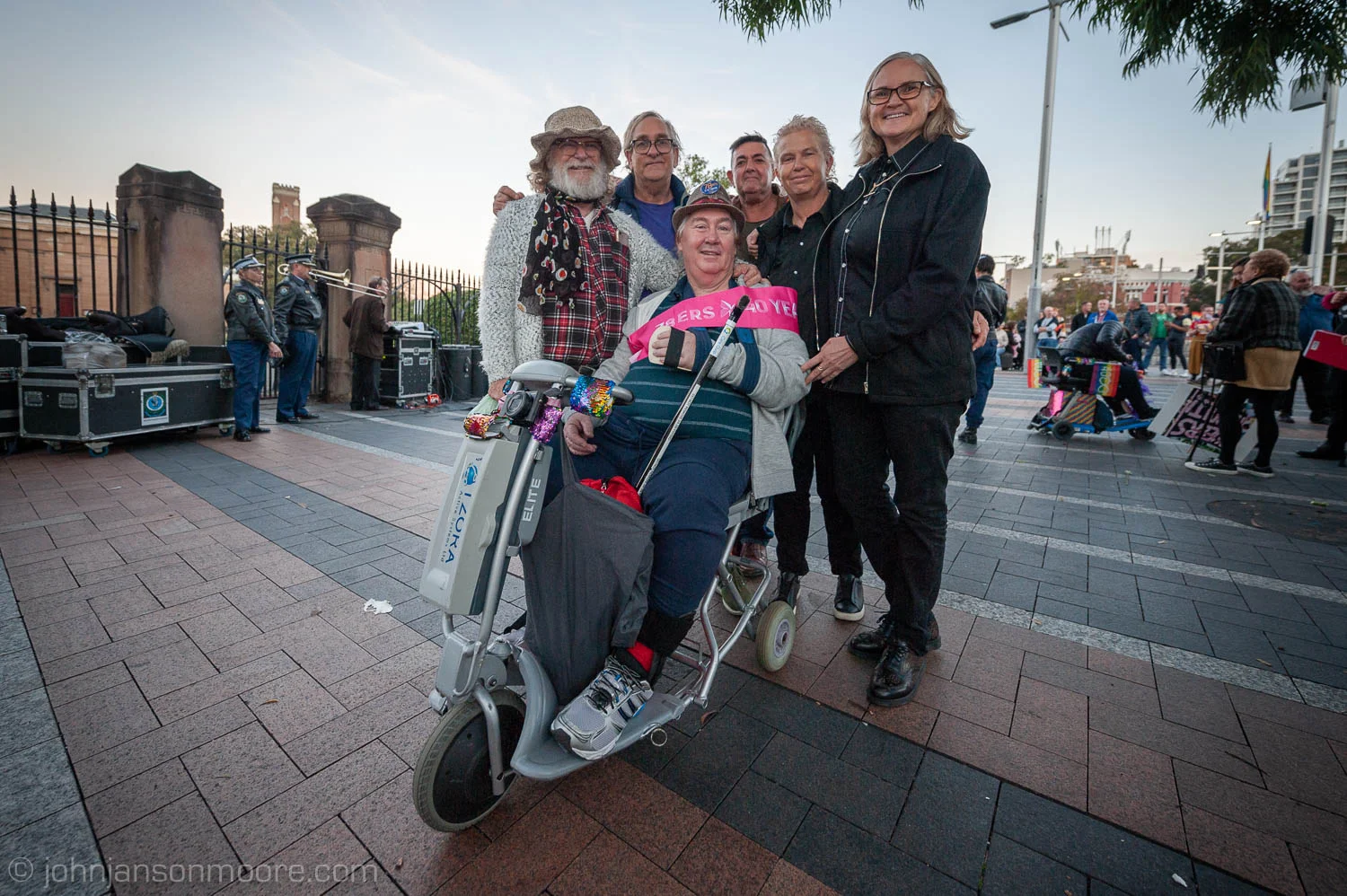
This year marks the 40th Anniversary of the first Sydney Gay and Lesbian Mardi Gras, when a group of activists marched from Taylor Square, down Oxford Street, to Hyde Park and then to Kings Cross, where they were met by a brutal police presence. Many were arrested and severely beaten.

To commemorate this important event, a group of the original so-called '78ers', and supporters, re-enacted these events of June 24th, 1978 by meeting at Taylor Square and marching the same route down Oxford Street. While there was again a police presence, this time no violence unfolded - the proceedings were officially sanctioned and supported by the police.

* click through images for full screen view.

End the NT Intervention! March and Rally

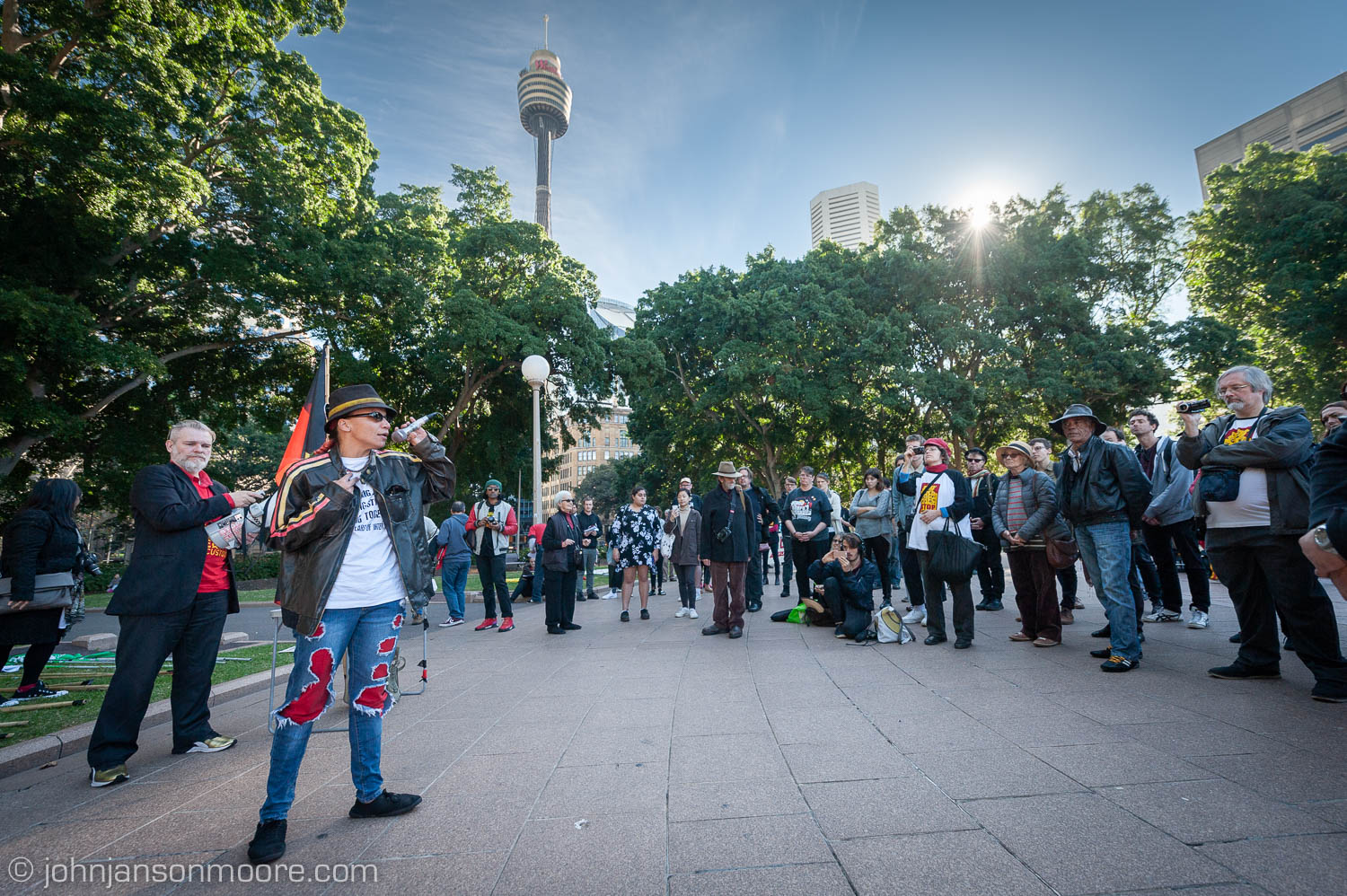
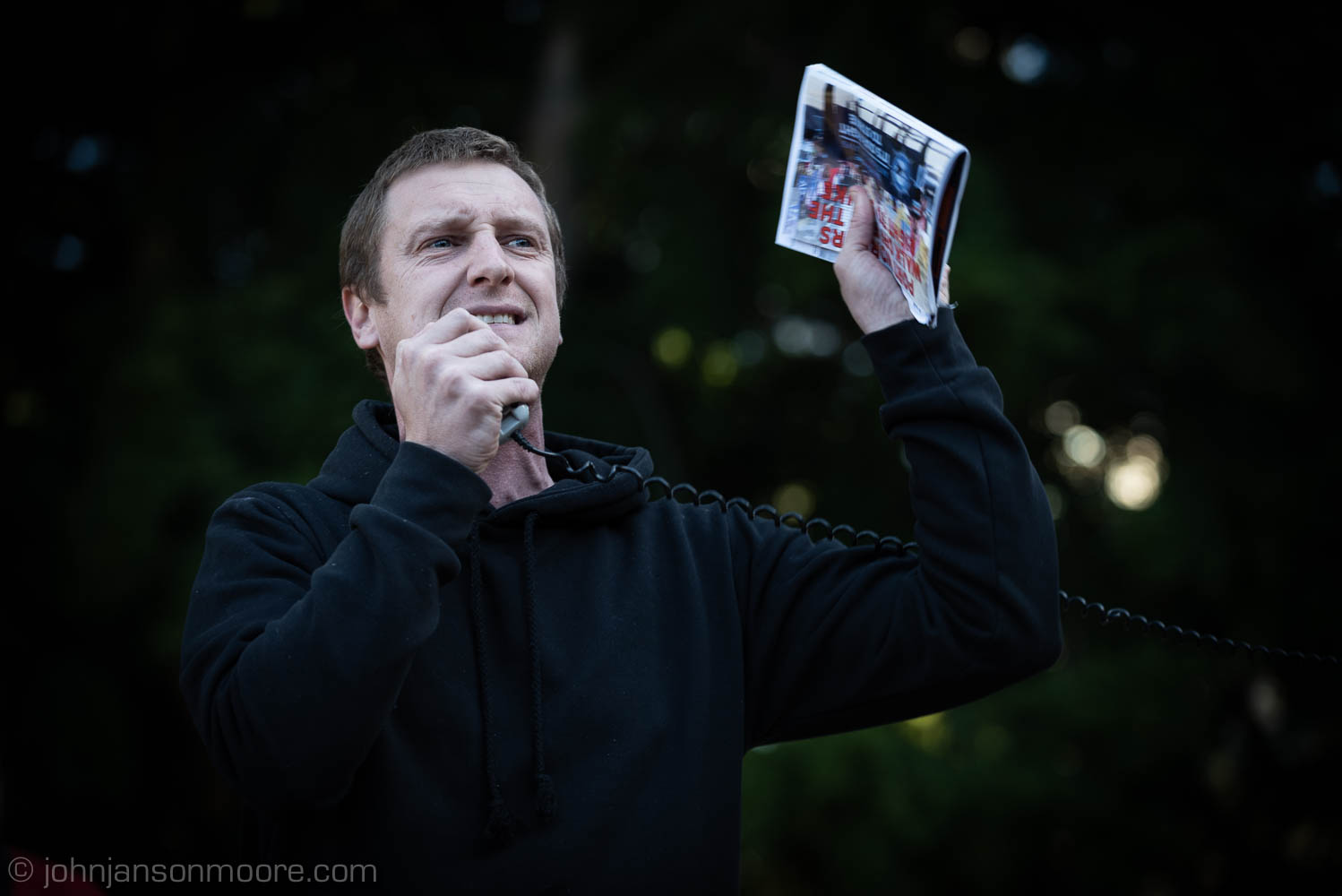
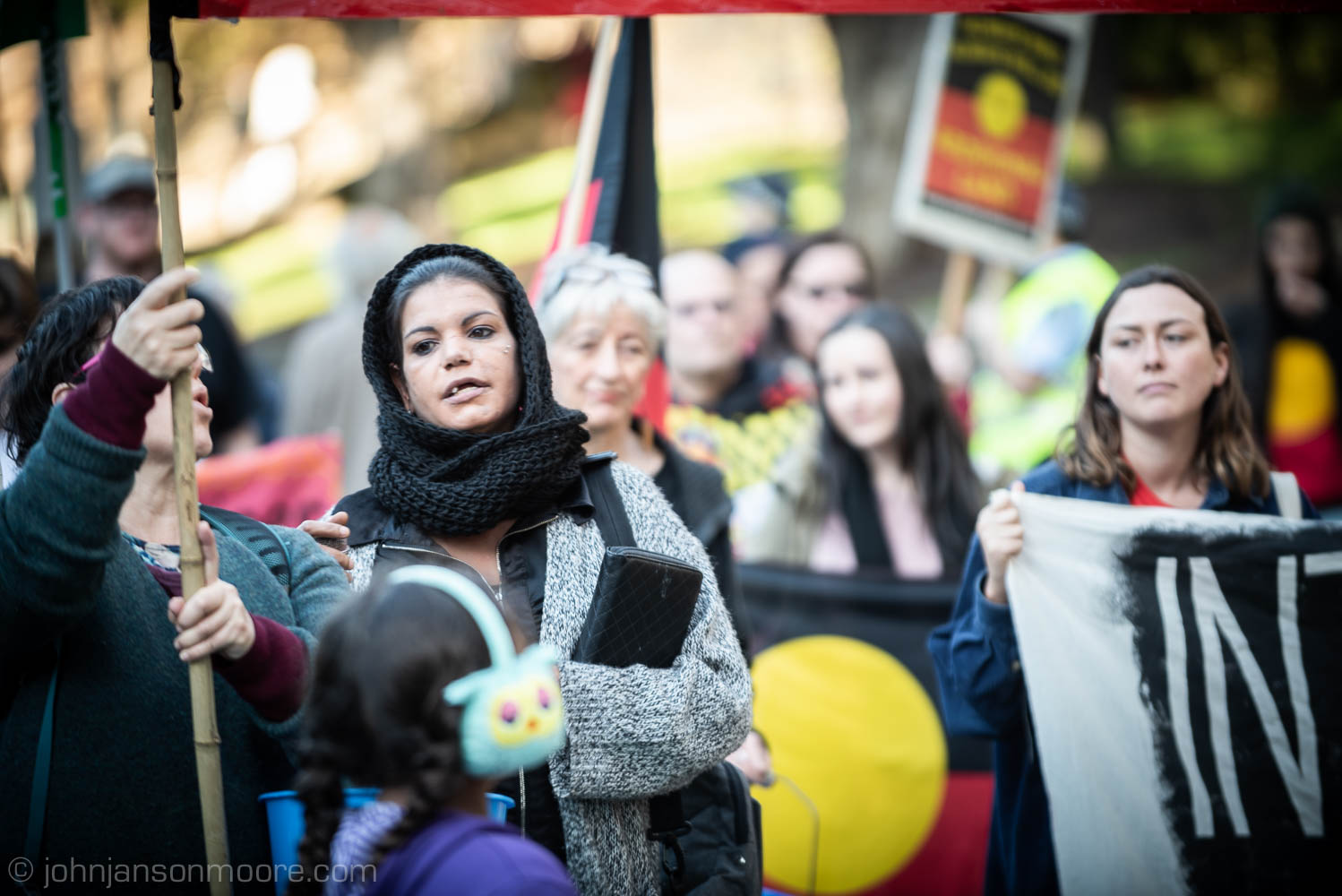
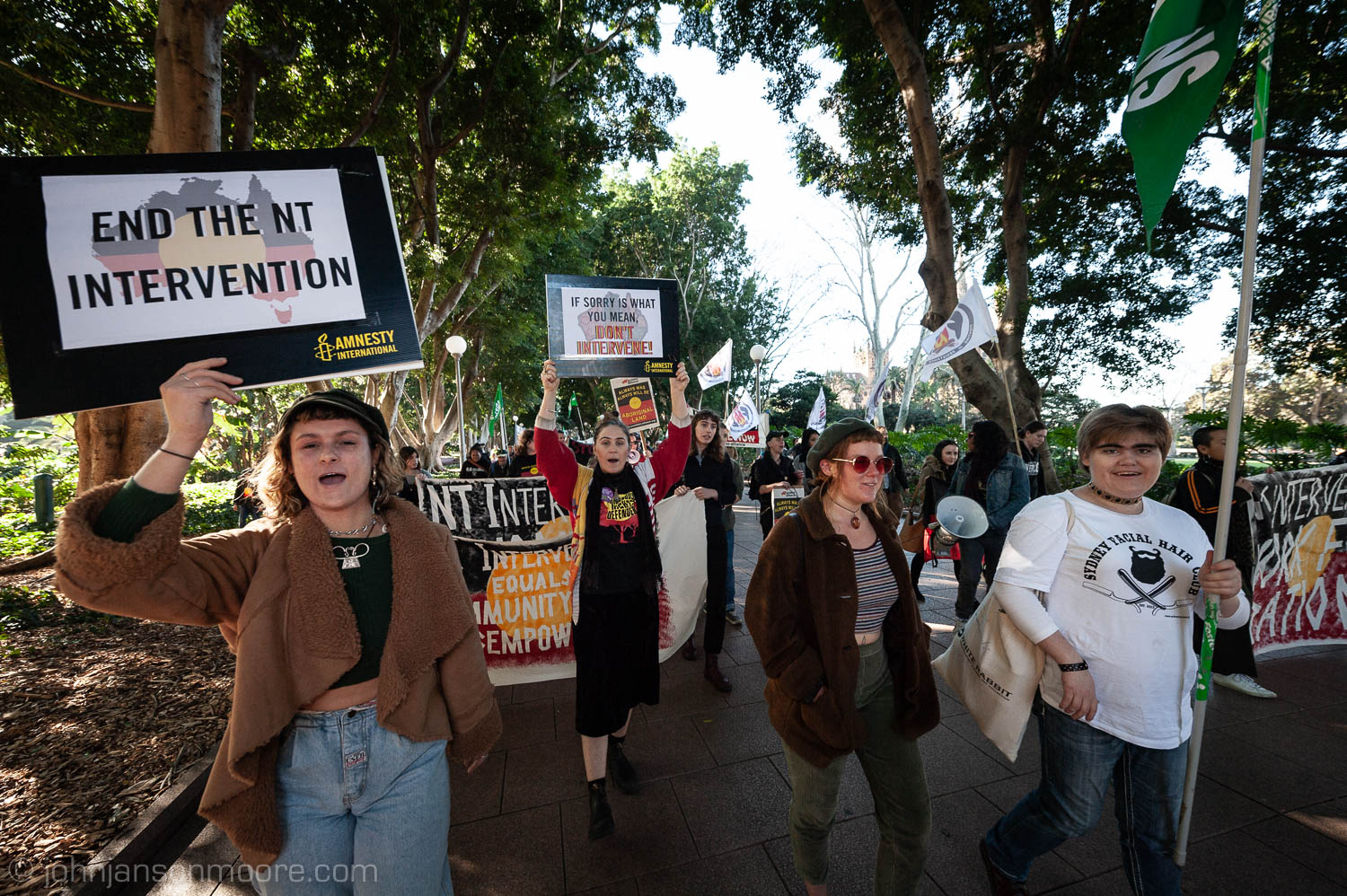
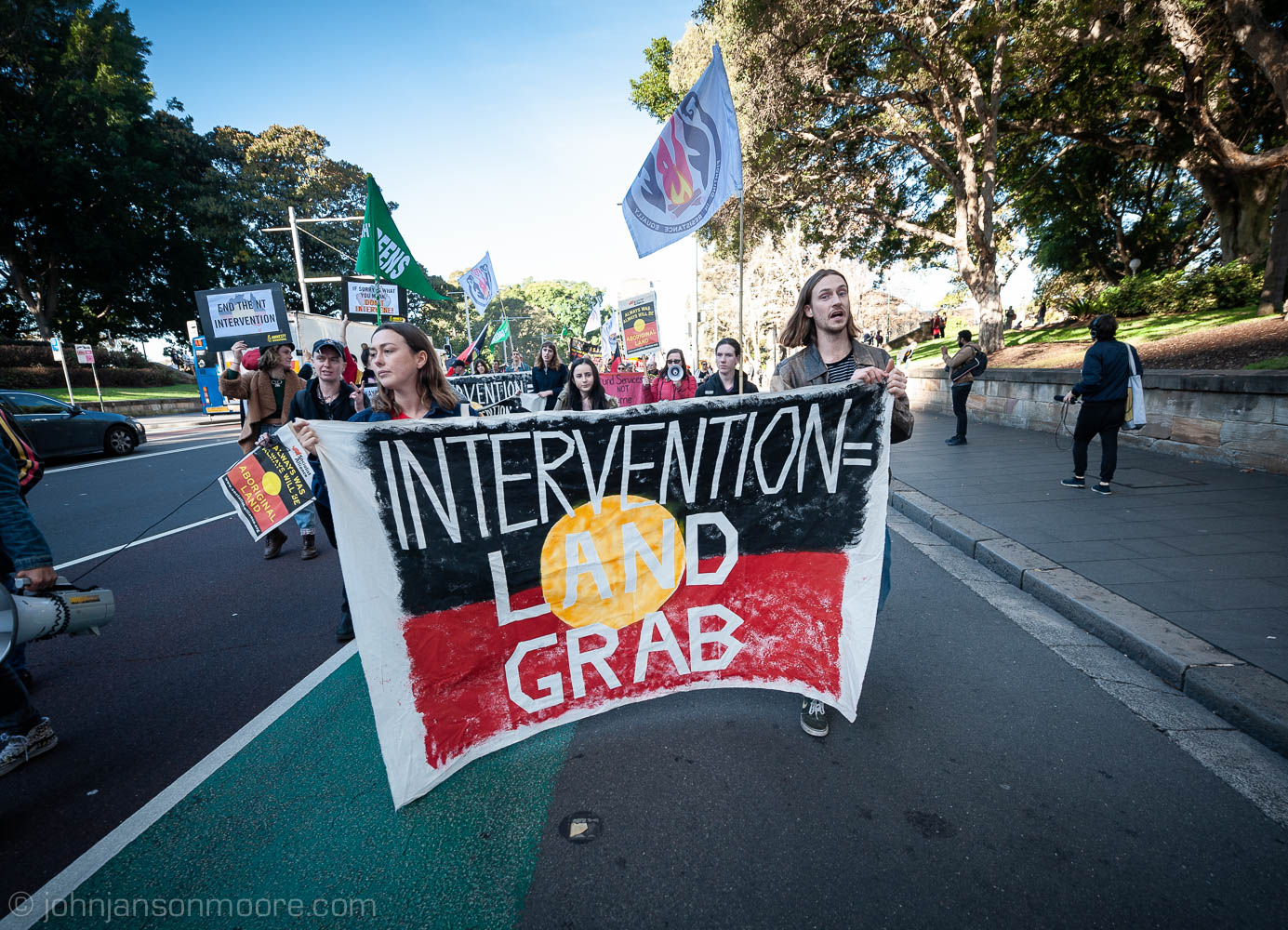
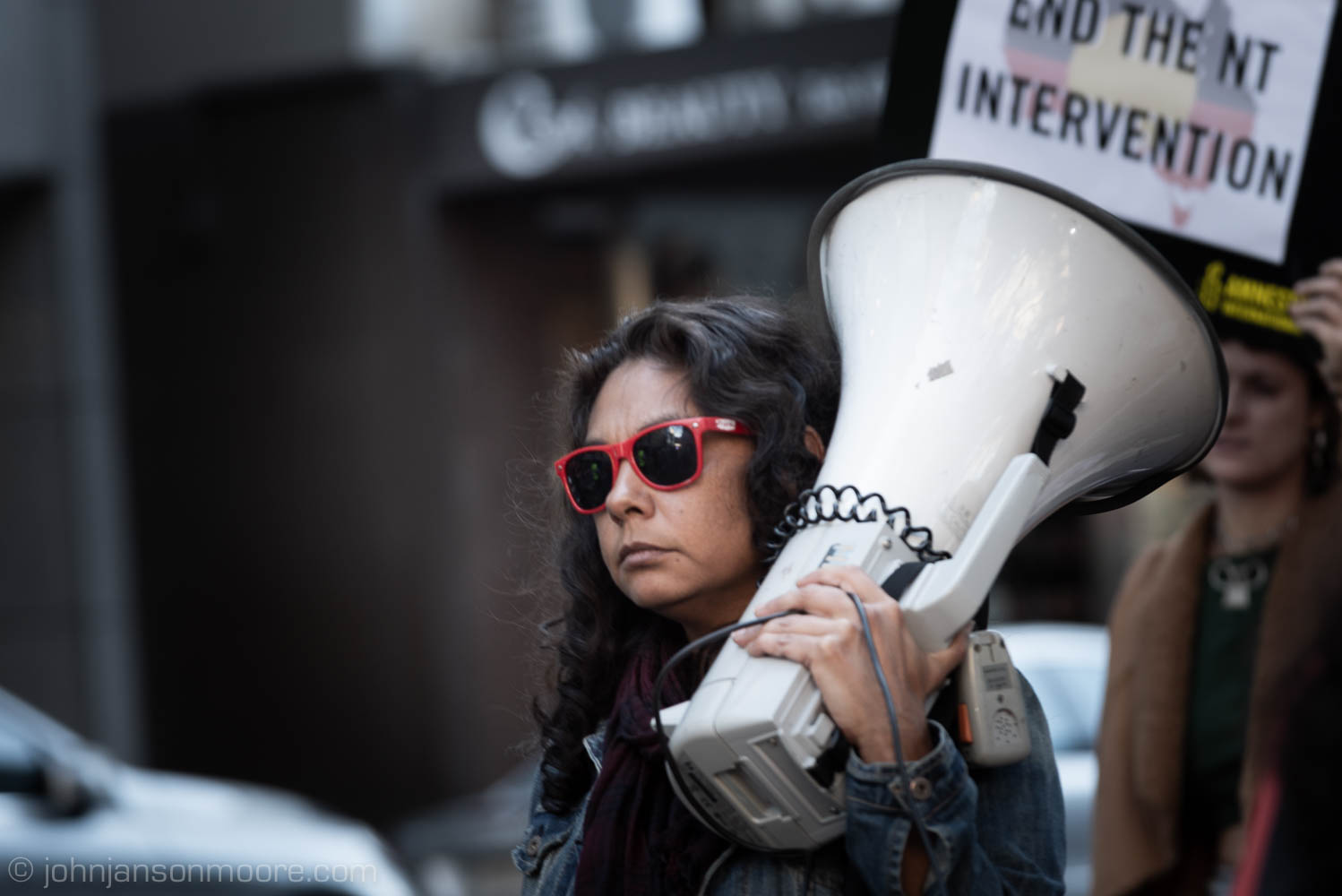
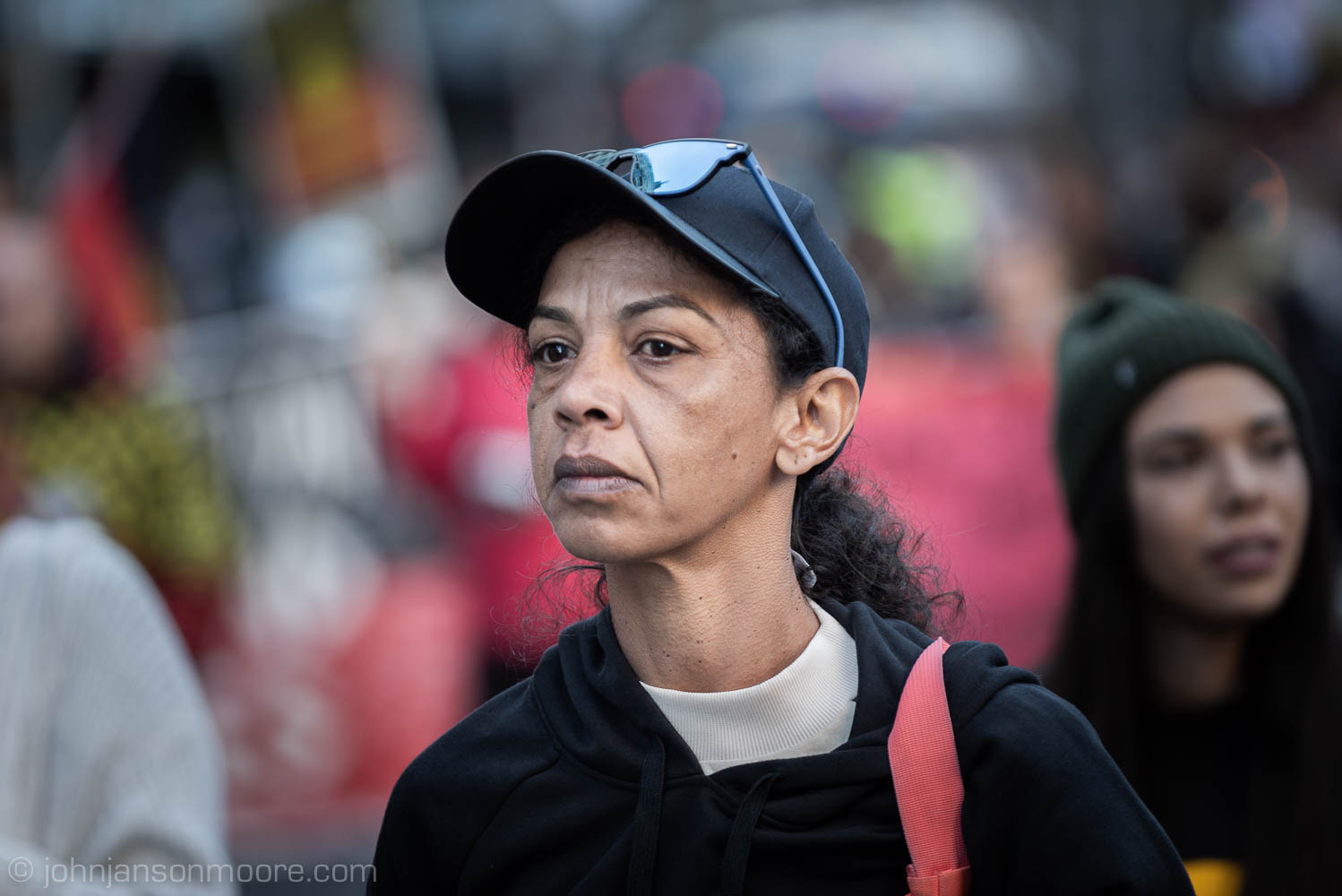
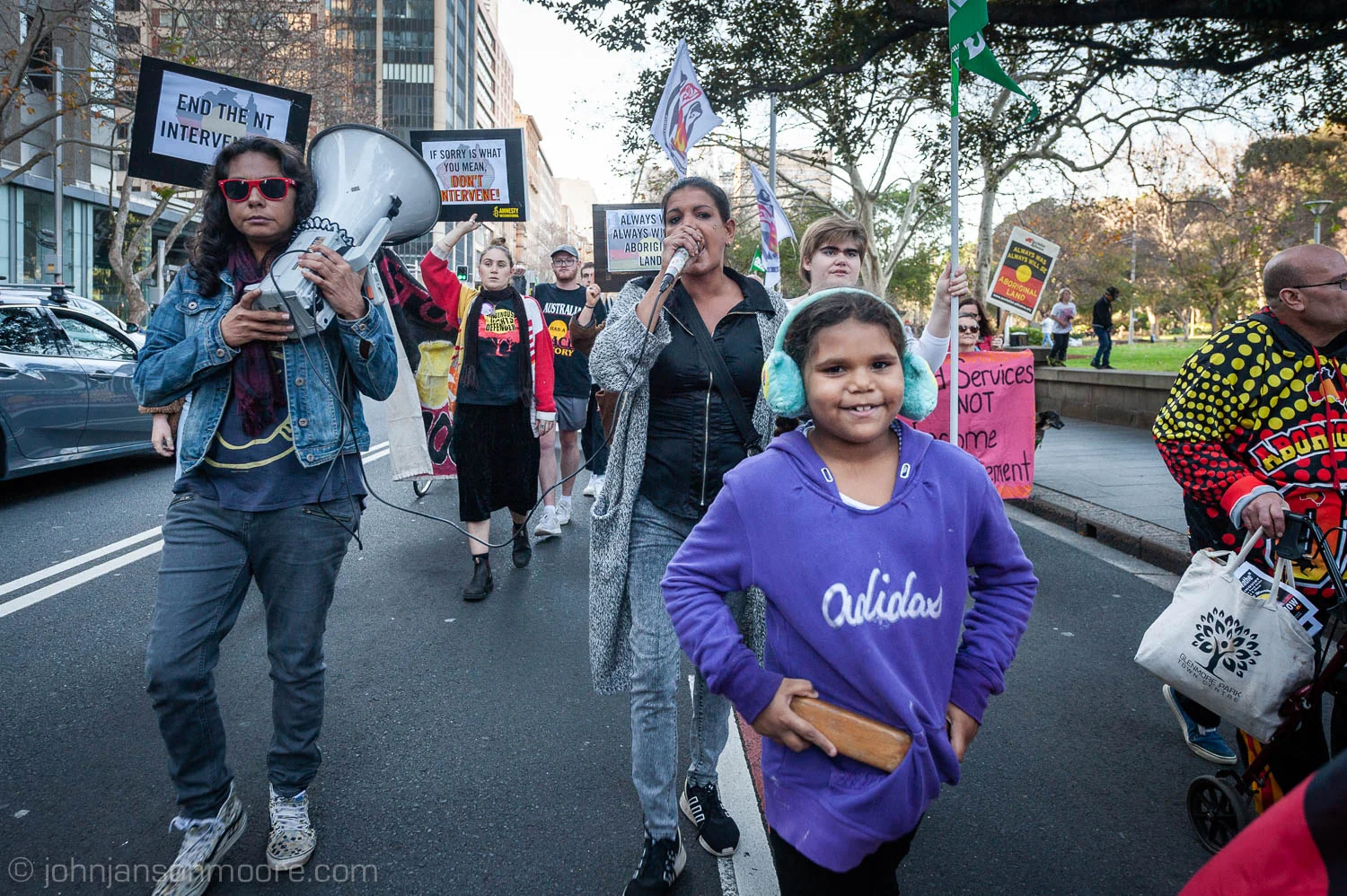
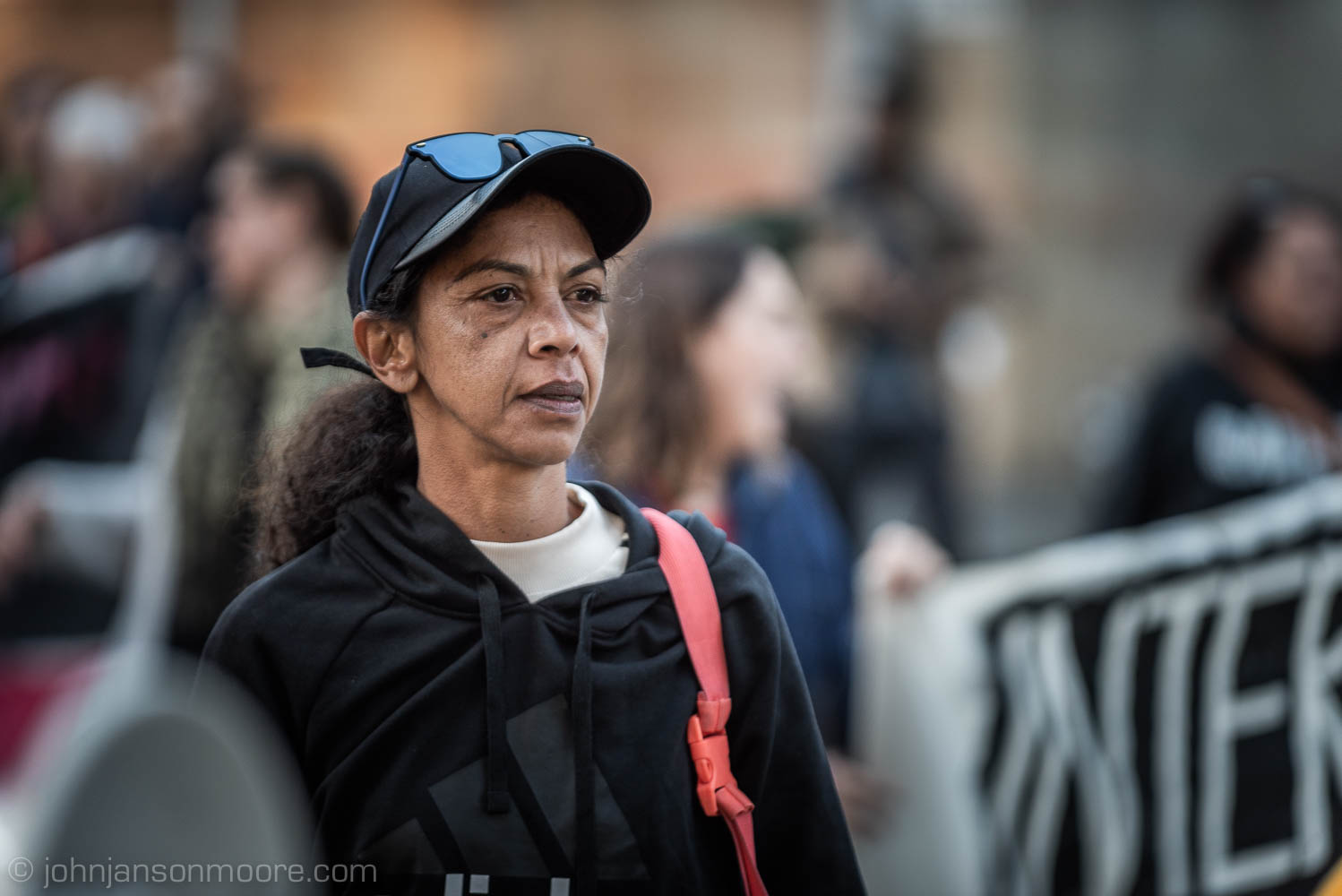
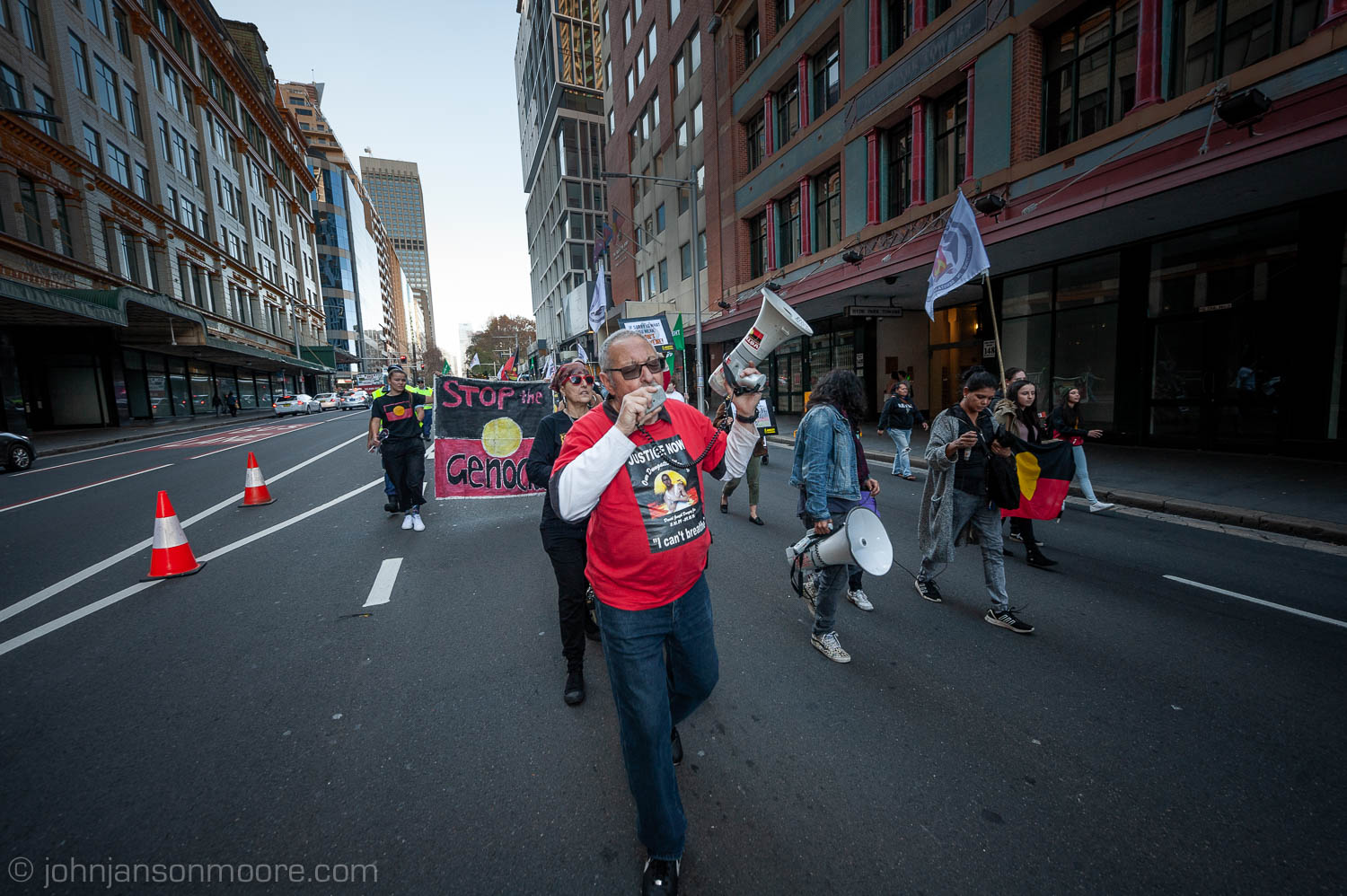
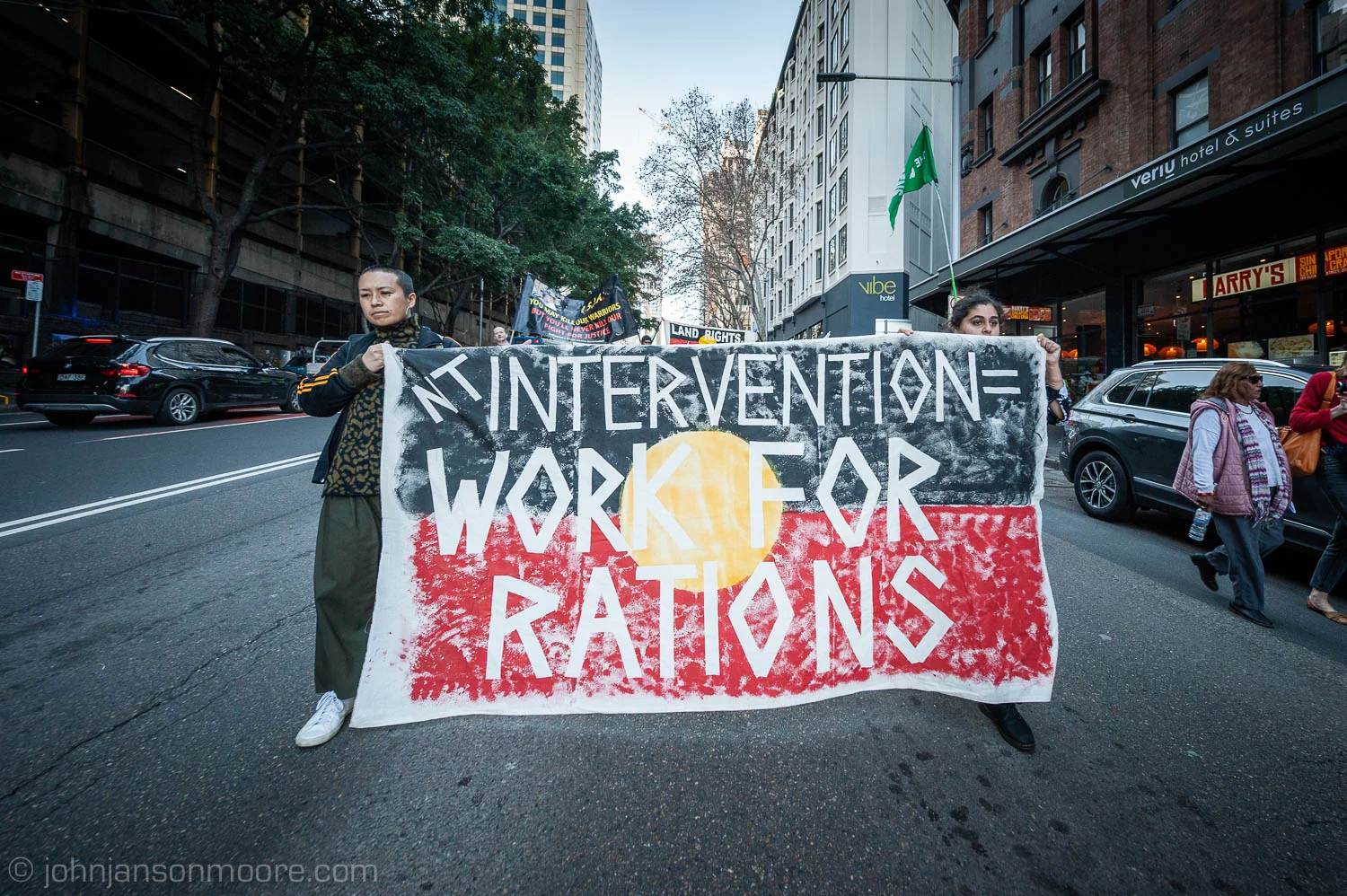
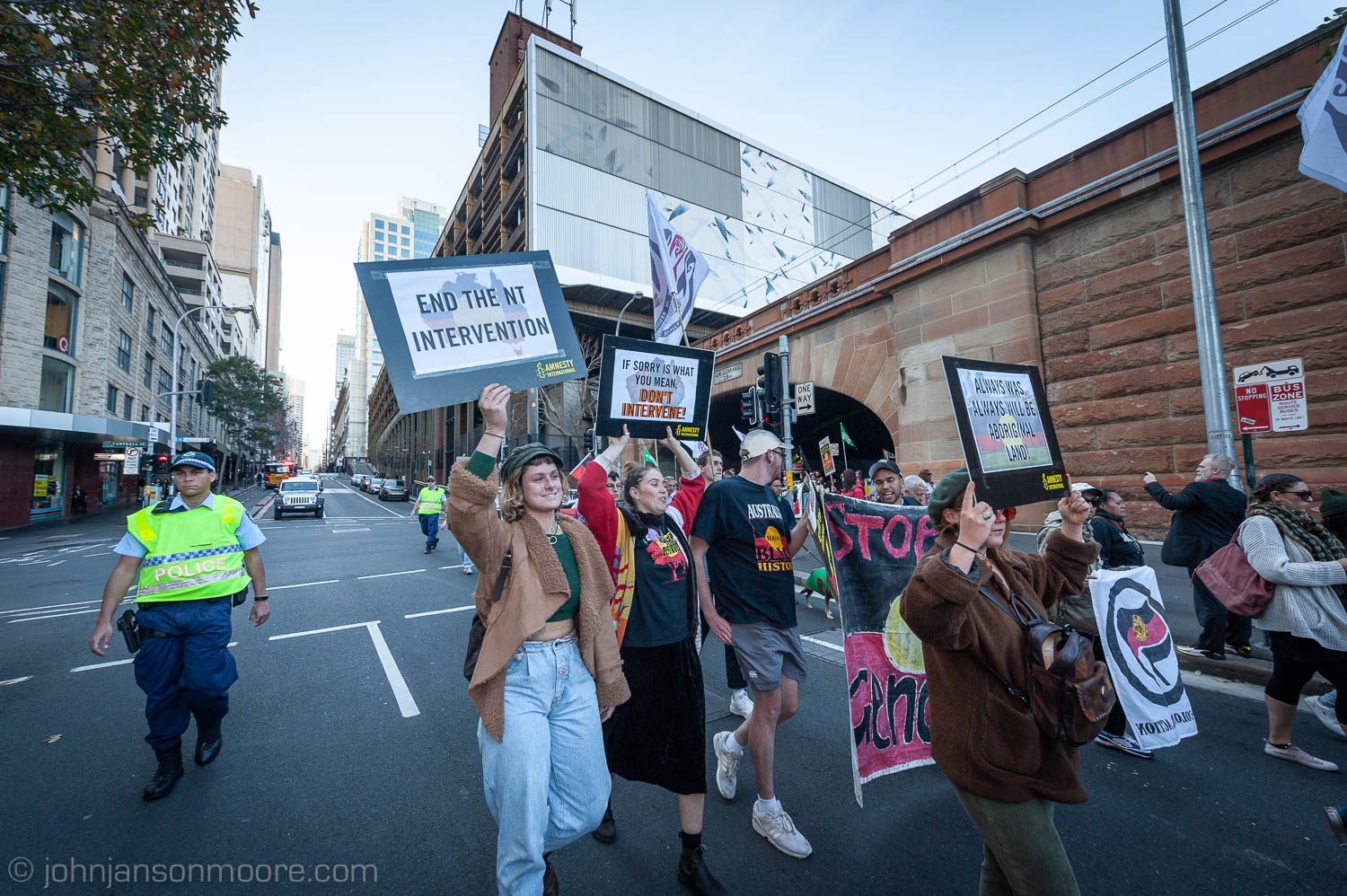
A modest but passionate crowd of around 150-200 people gathered at Hyde Park in Sydney's CBD to protest against the Federal Government's so-called 'Intervention' which was implemented in the Northern Territory 11 years ago, to this day.

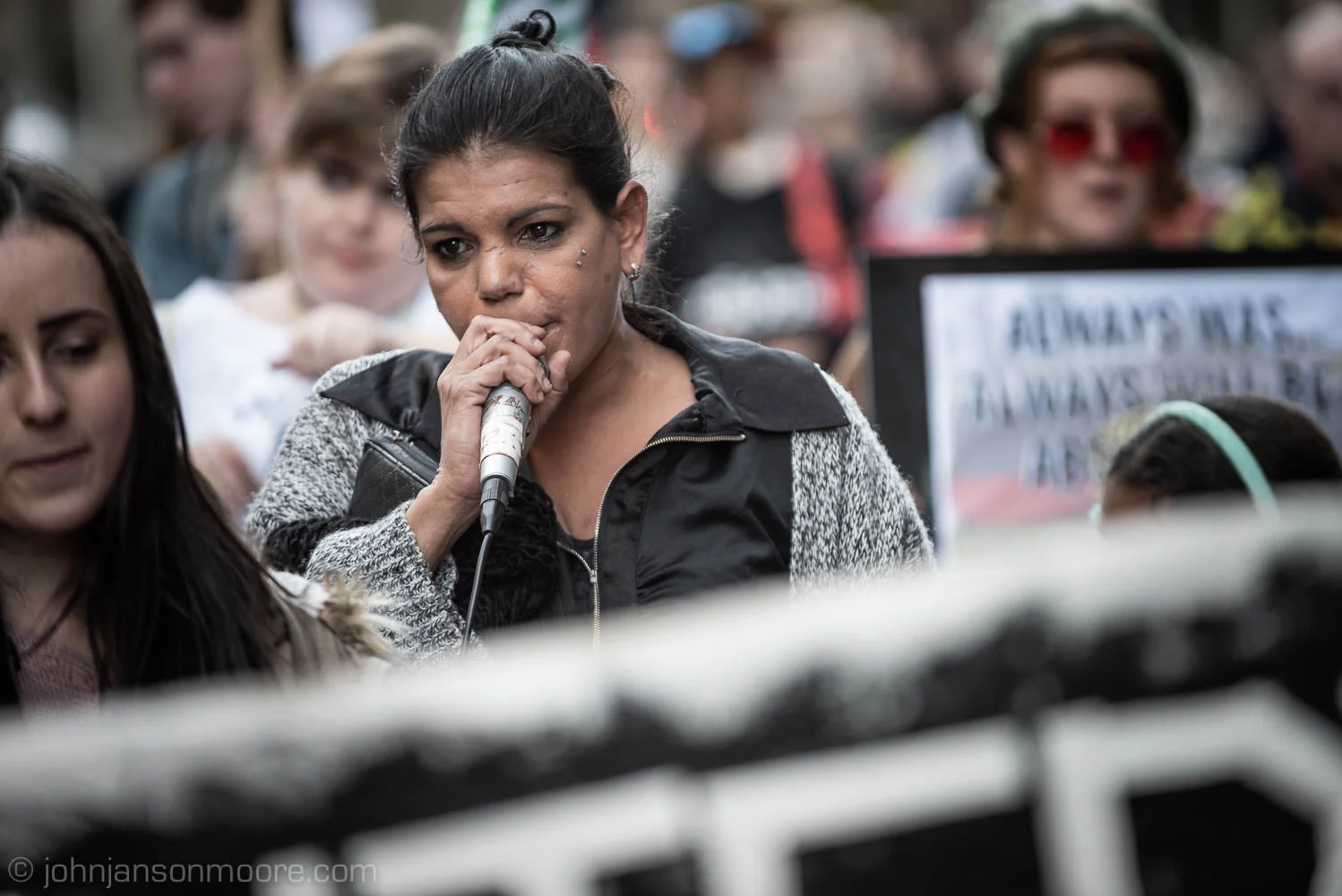
Speakers, including Elizabeth Jarrett, Uncle Ken Canning, Christine Palmer (NT), Paddy Gibson, Raymond Finn (SA) and David Shoebridge, decried the Intervention, accusing the Government of specifically targeting Aboriginal communities with draconian restrictions.

The crowd marched down Elizabeth Street to Belmore Park.

More information on the NT Intervention can be found:

Here, here, here and here.

*click through images for full screen view
180 Years - Anniversary of the Myall Creek Massacre

June 10th this year marks the 180th anniversary of the Myall Creek massacre, where at least 28 Aboriginal men, women and children were slaughtered and their bodies mutilated, then burnt.

The incident was just one of countless other massacres on Gomeroi-Gamillaraay country during the 19th Century. 

The Myall Creek Massacre in 1838 is significant, not just because of the lives lost and the brutality of the events, but also because it was the first instance that white Europeans were prosecuted and found guilty of violence against Aboriginal people. While some people have cited the trial as an example of British justice at work, the flow on effect was that the violence against Aboriginal peoples across Australia went 'underground' and undeterred - massacres were covered up in secret rather than openly committed, waterholes were poisoned, and the steady dispossession of land and culture continued and continues, right up until today.

The photos below were taken earlier this year, at the site of the memorial for the Myall Creek massacre in northern NSW.


*click on images for full screen view.

Images From The Embassy

Keep Kids In Culture - National GMAR Delegation in Canberra

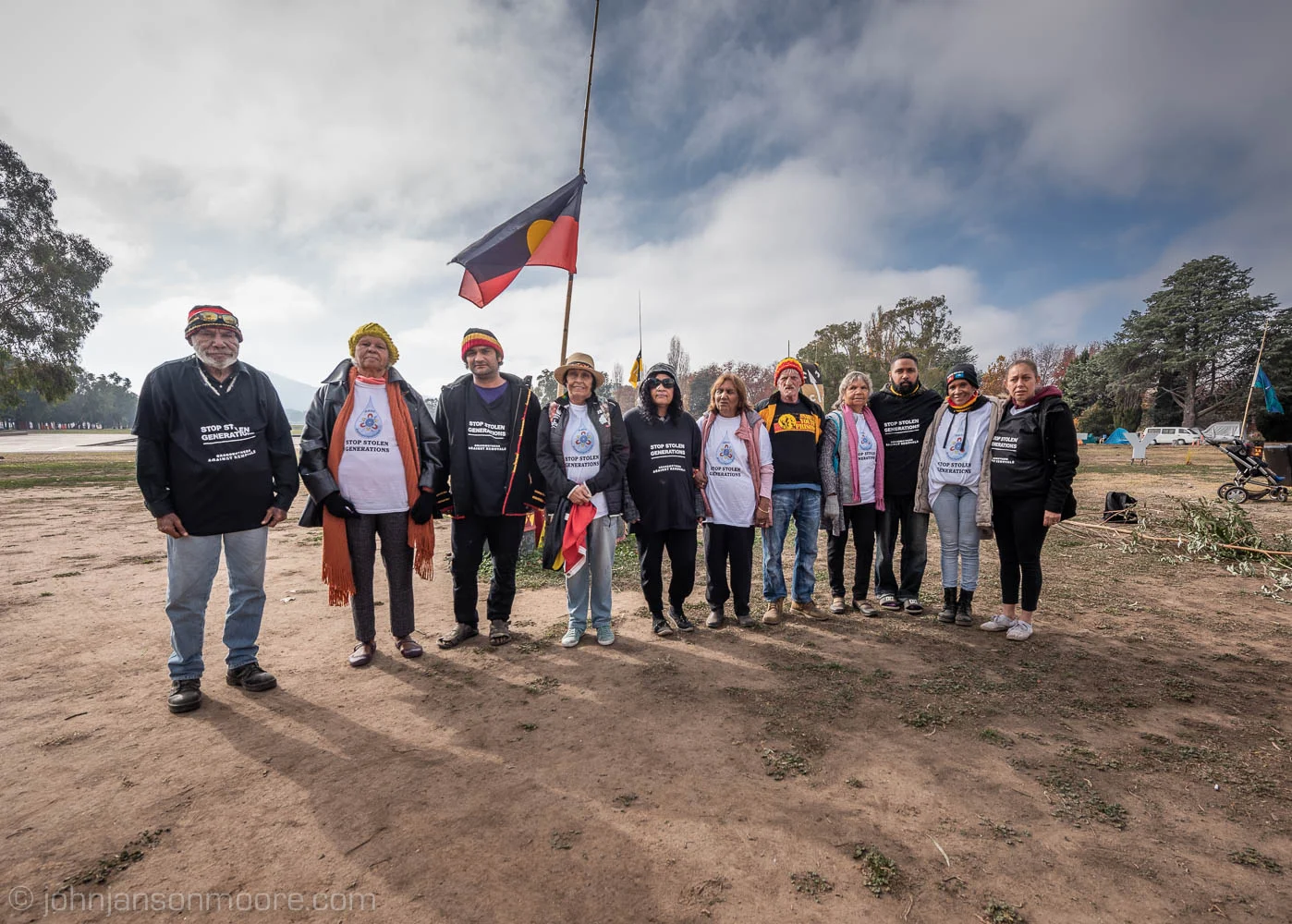
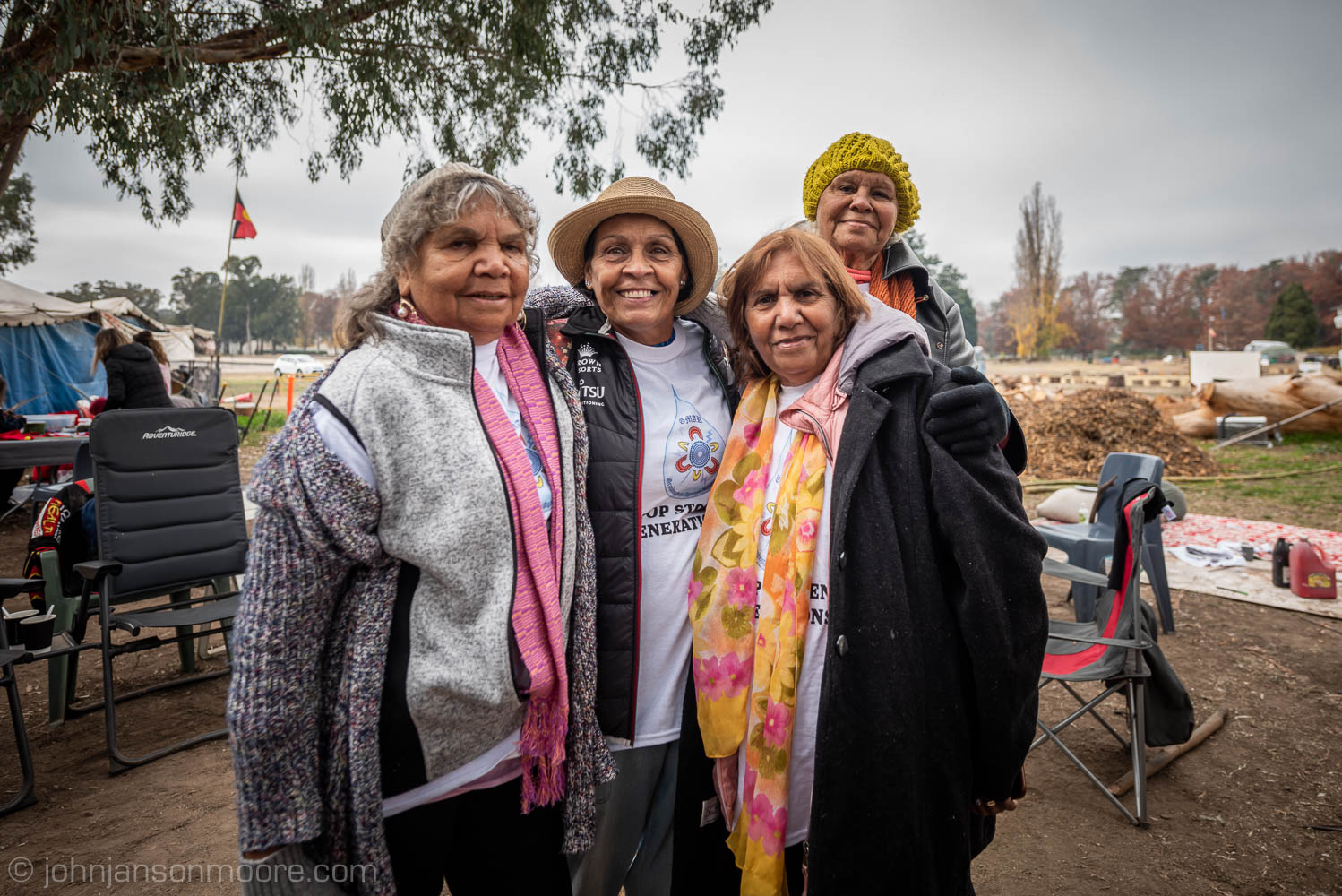
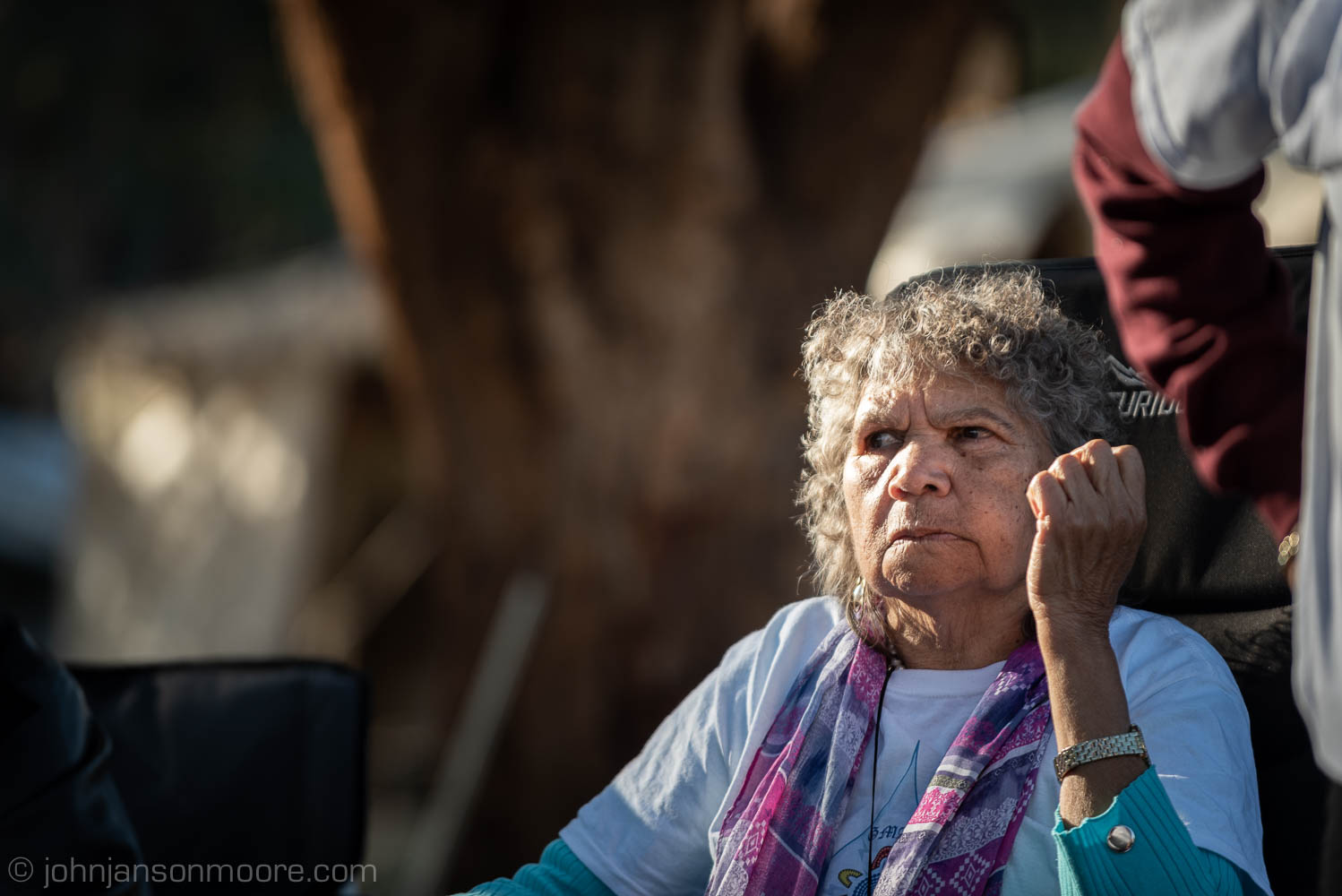
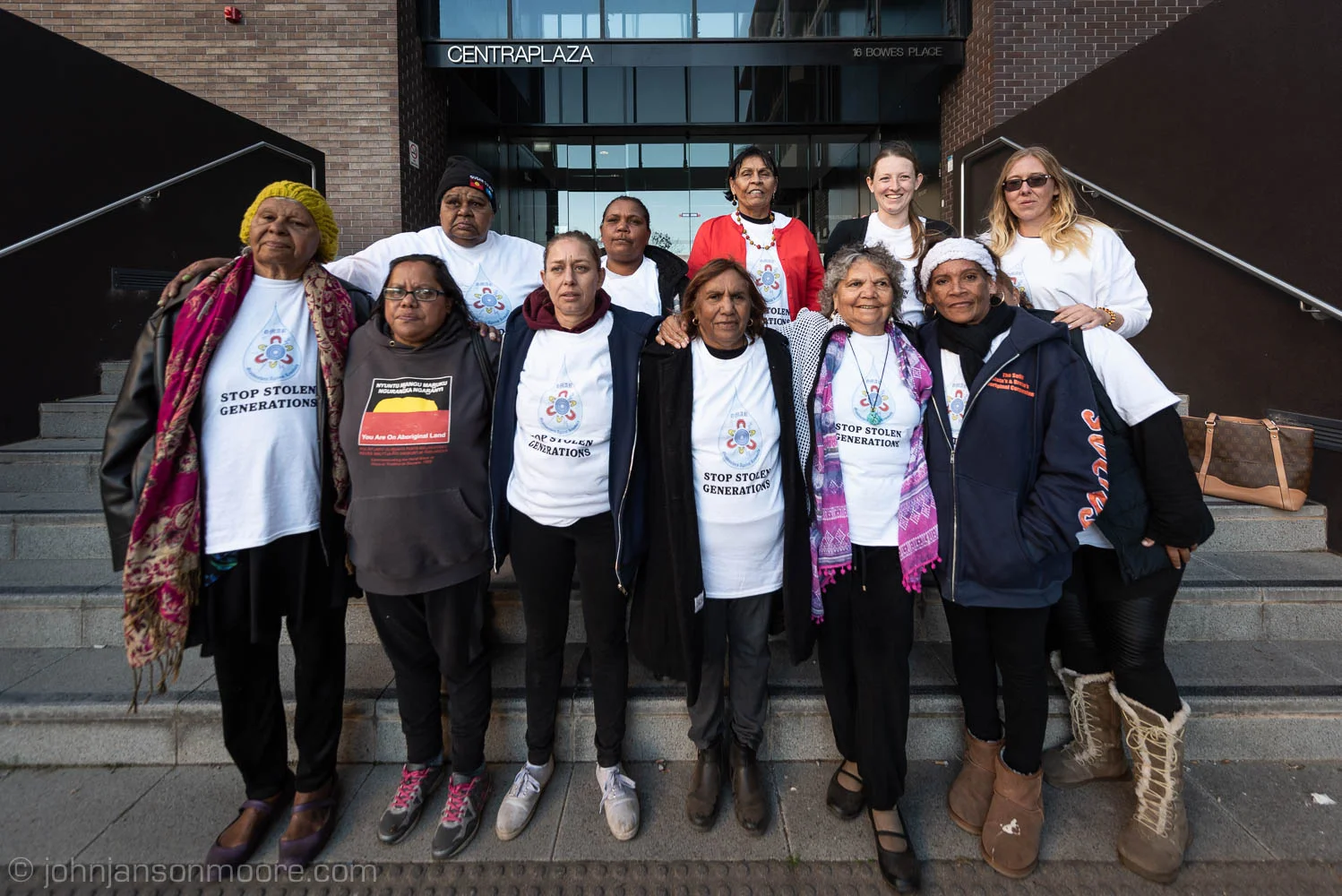
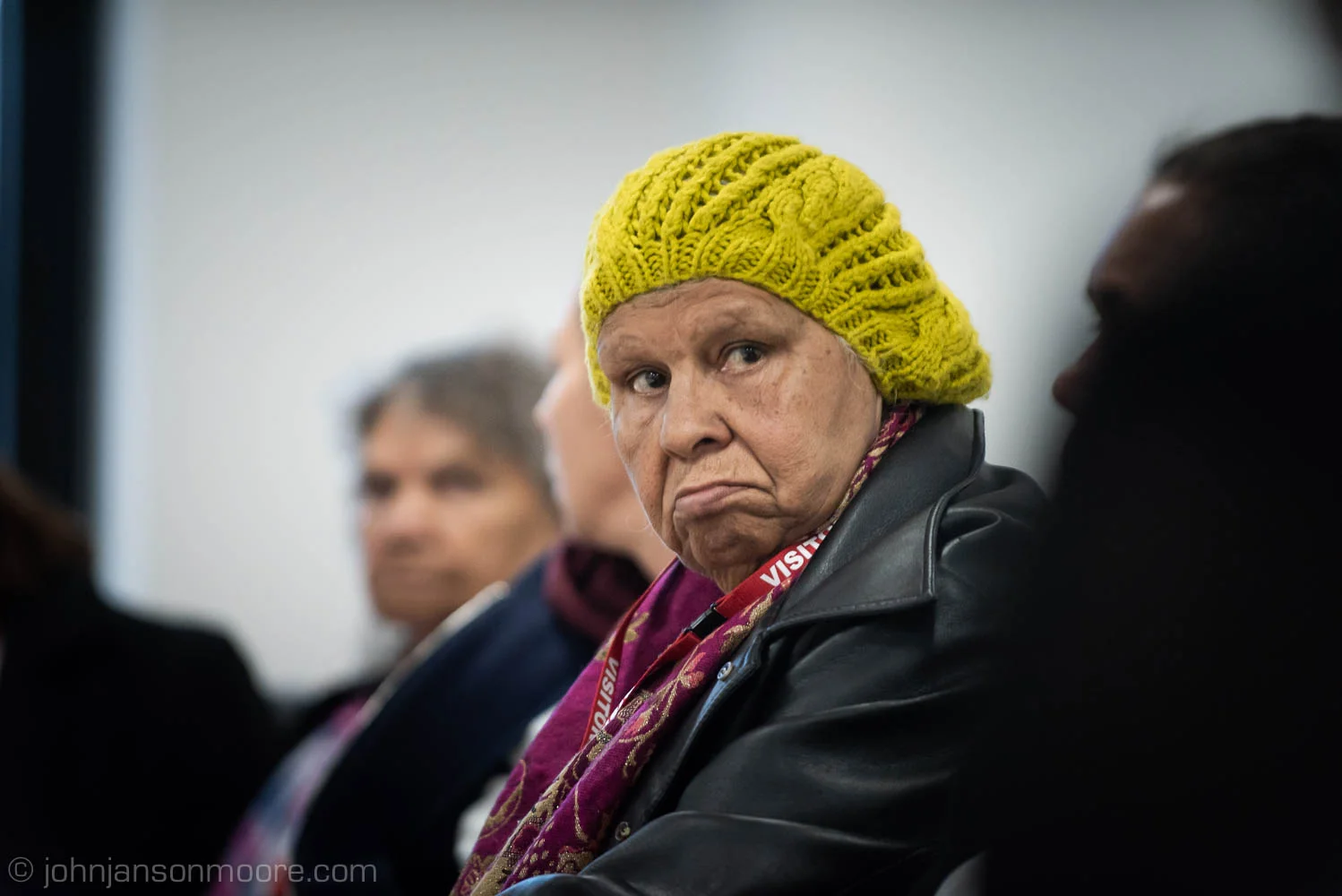
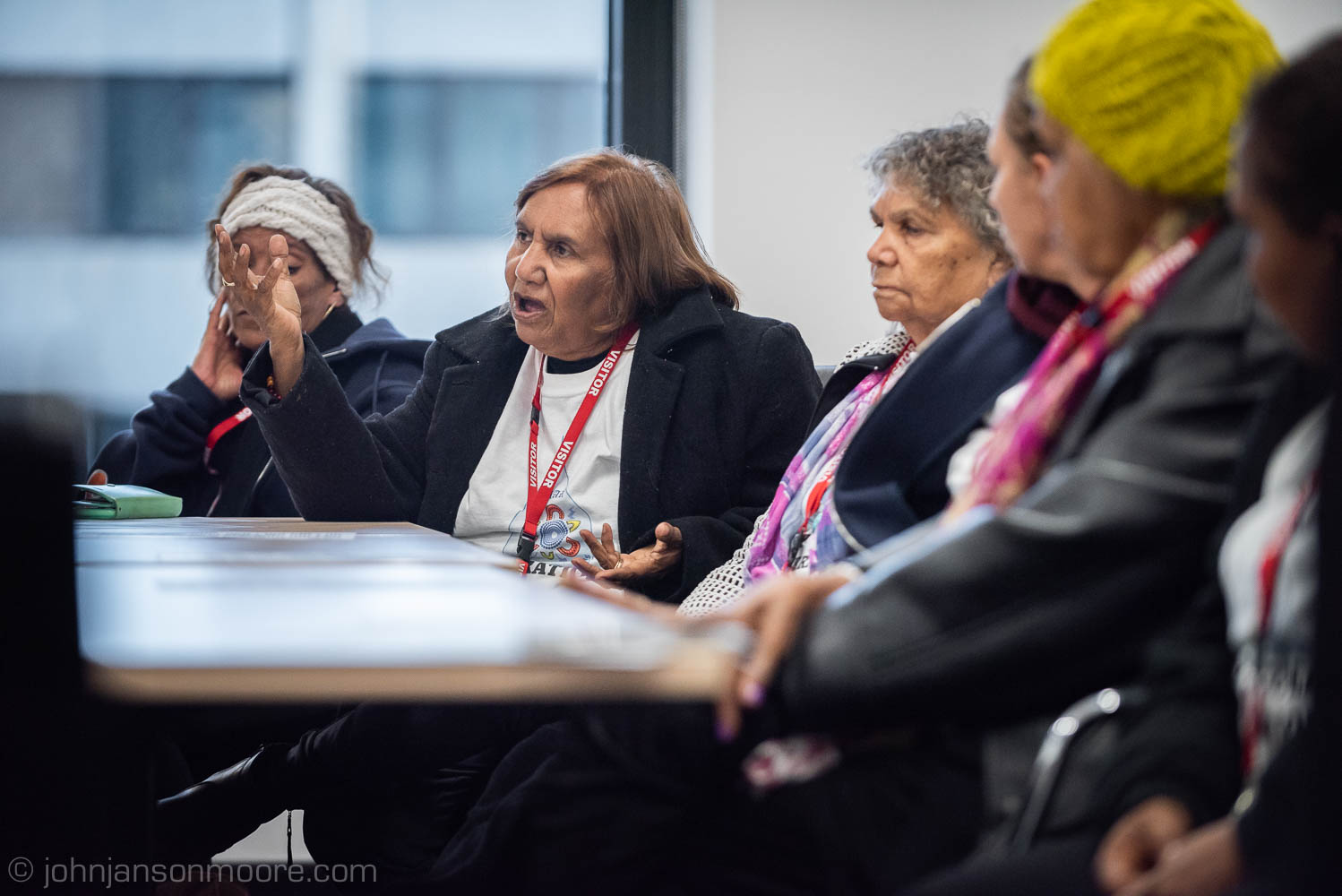
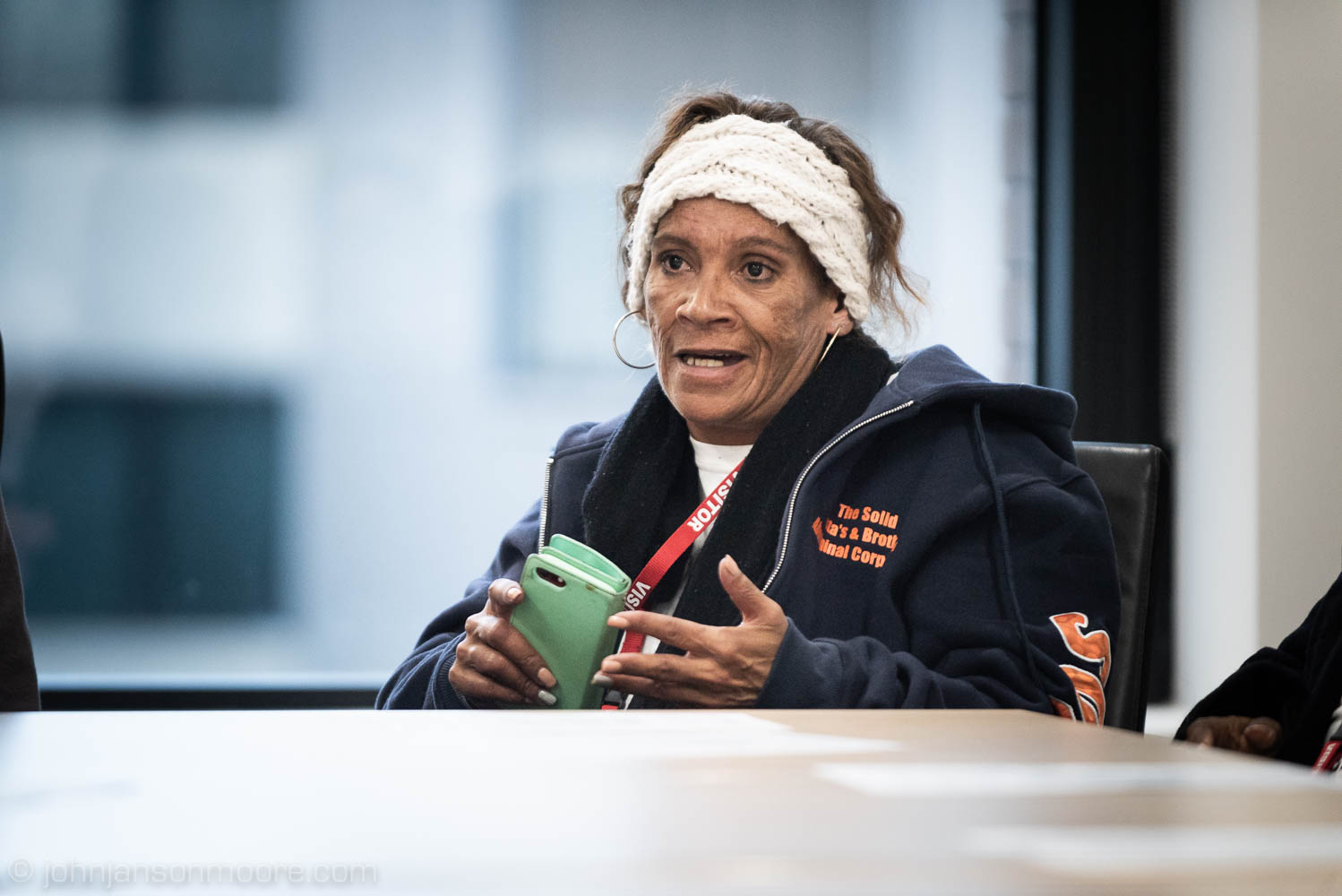
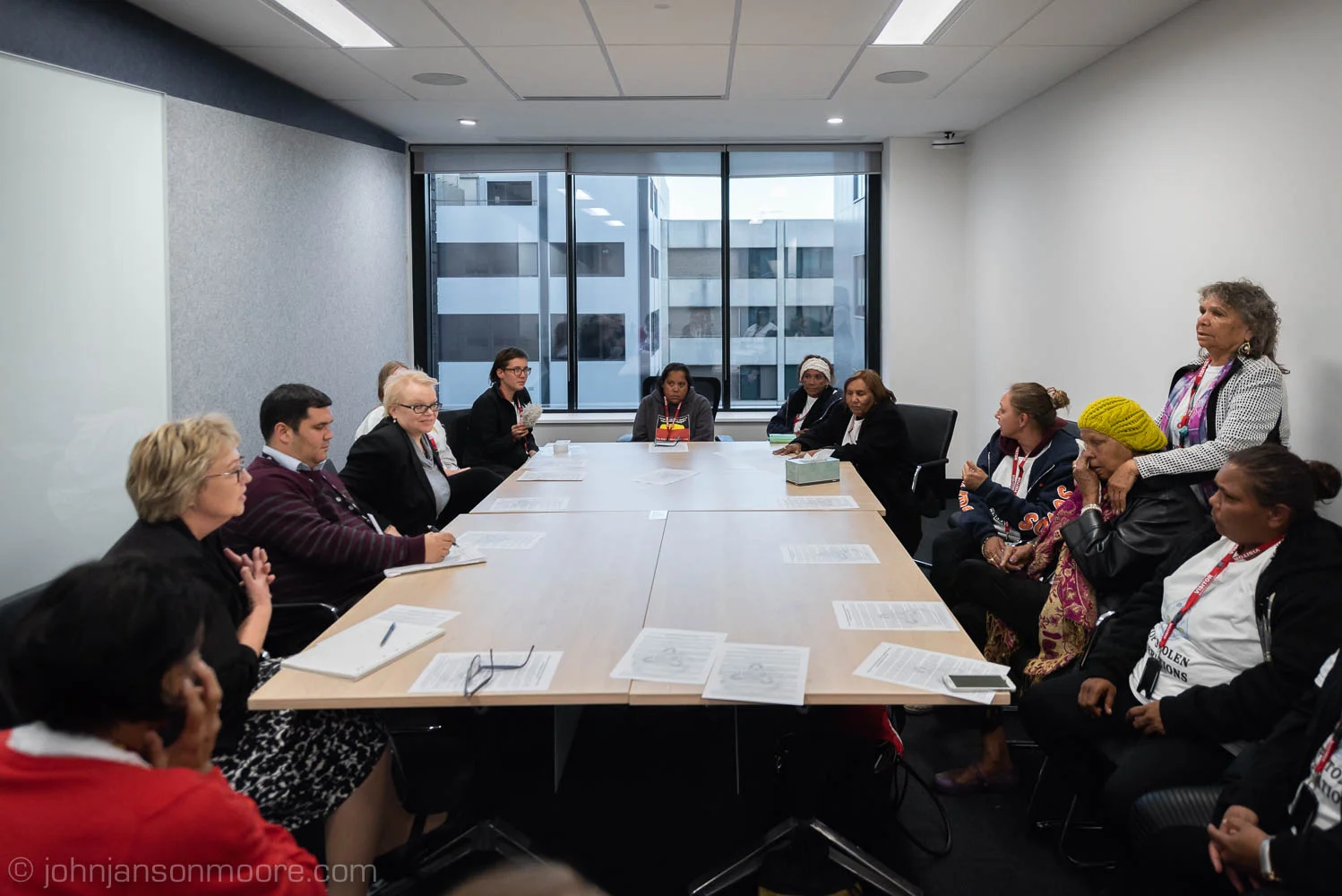
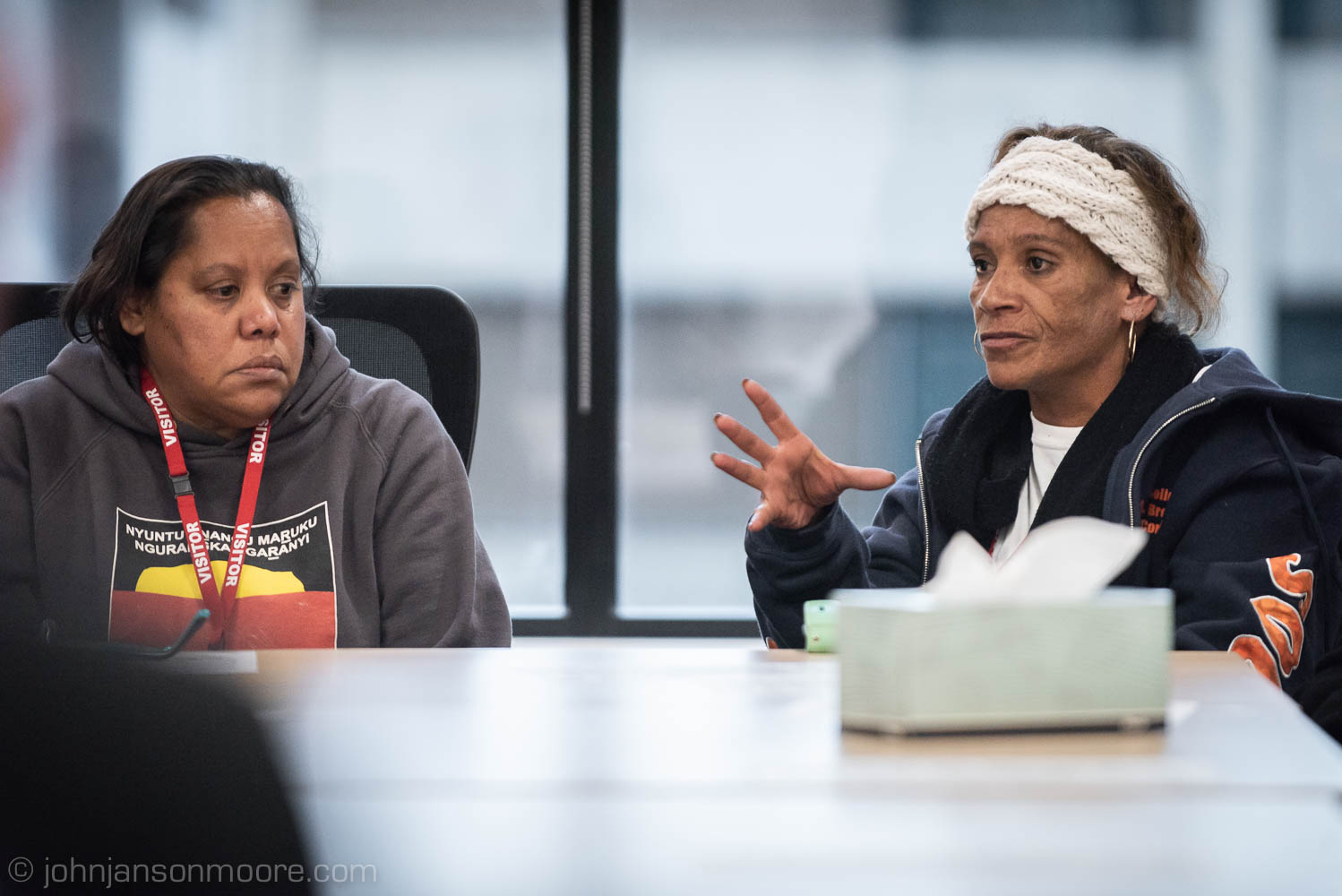
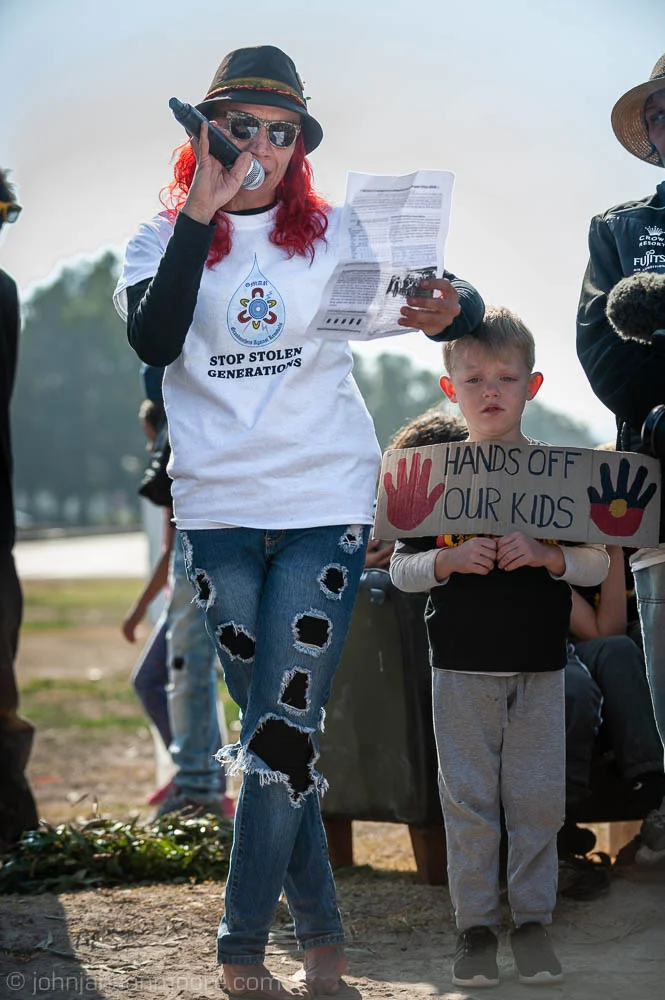
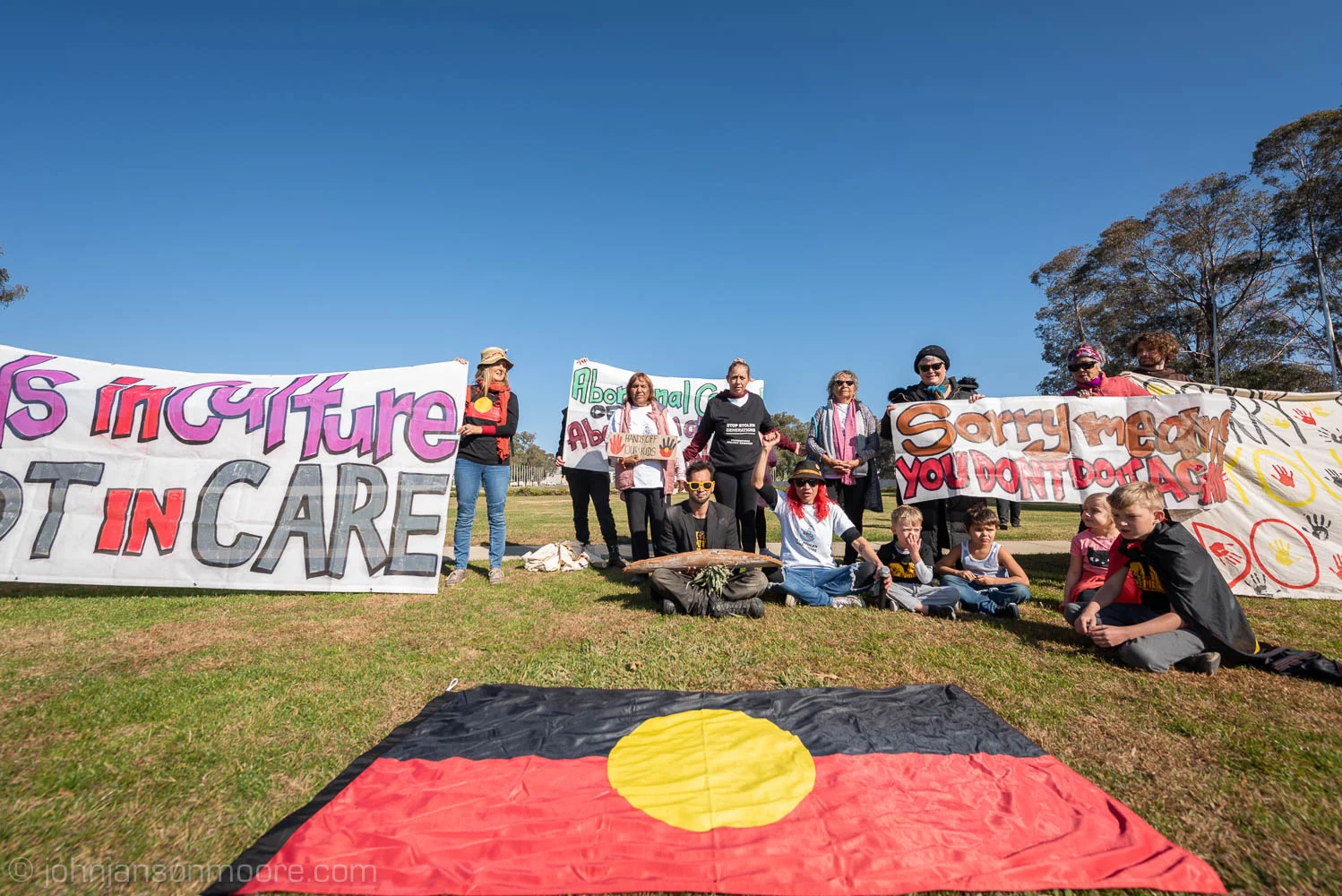
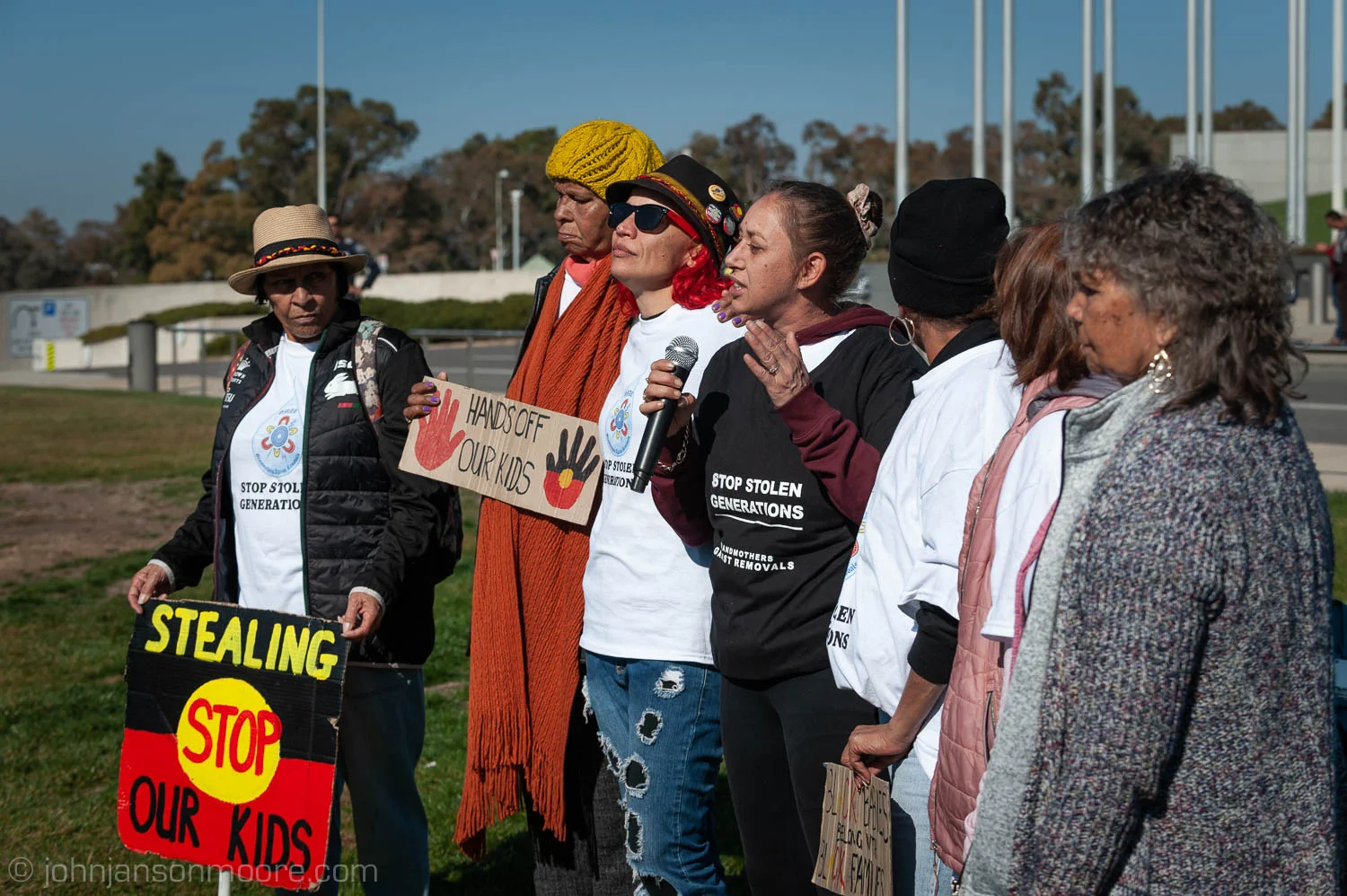
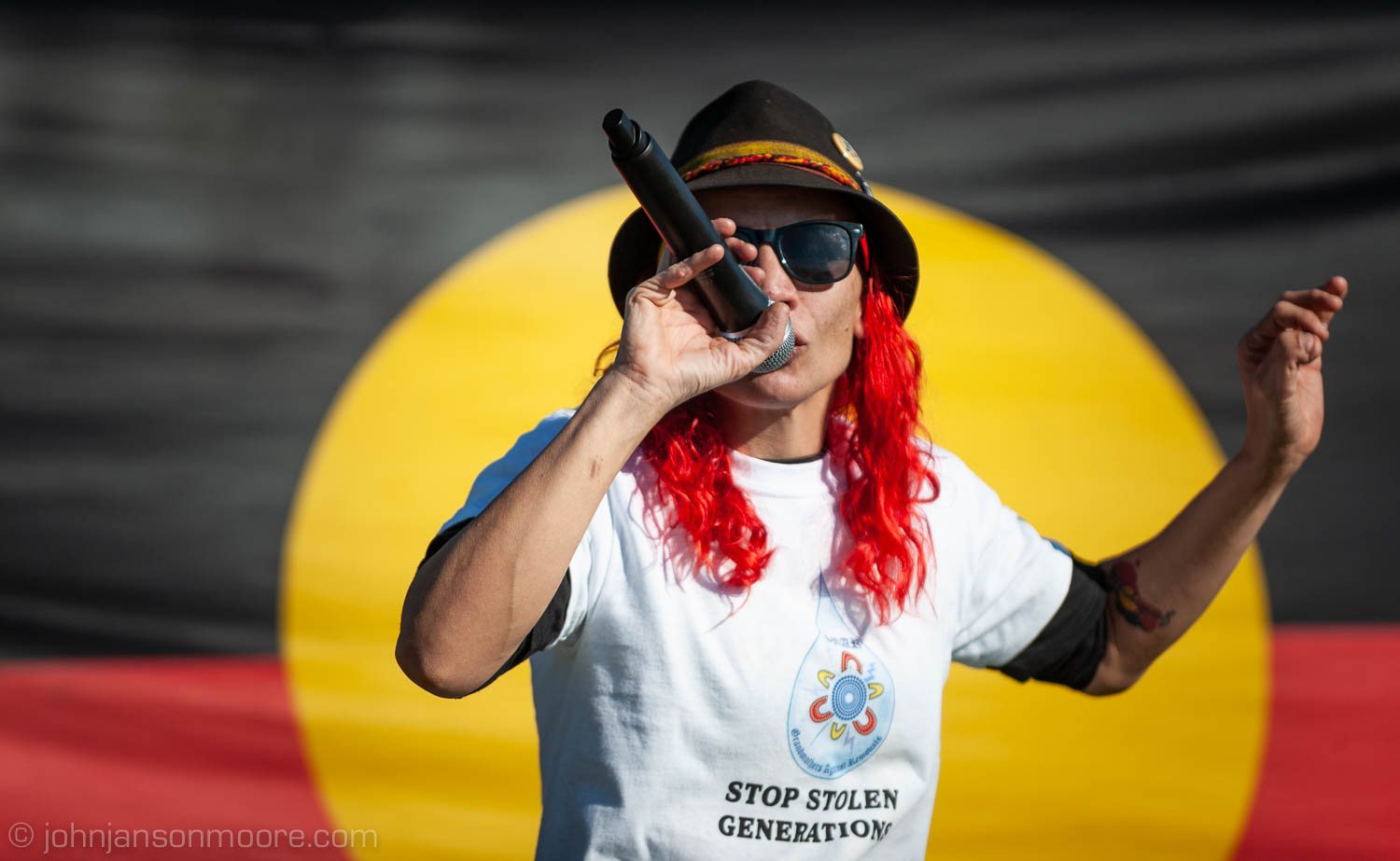
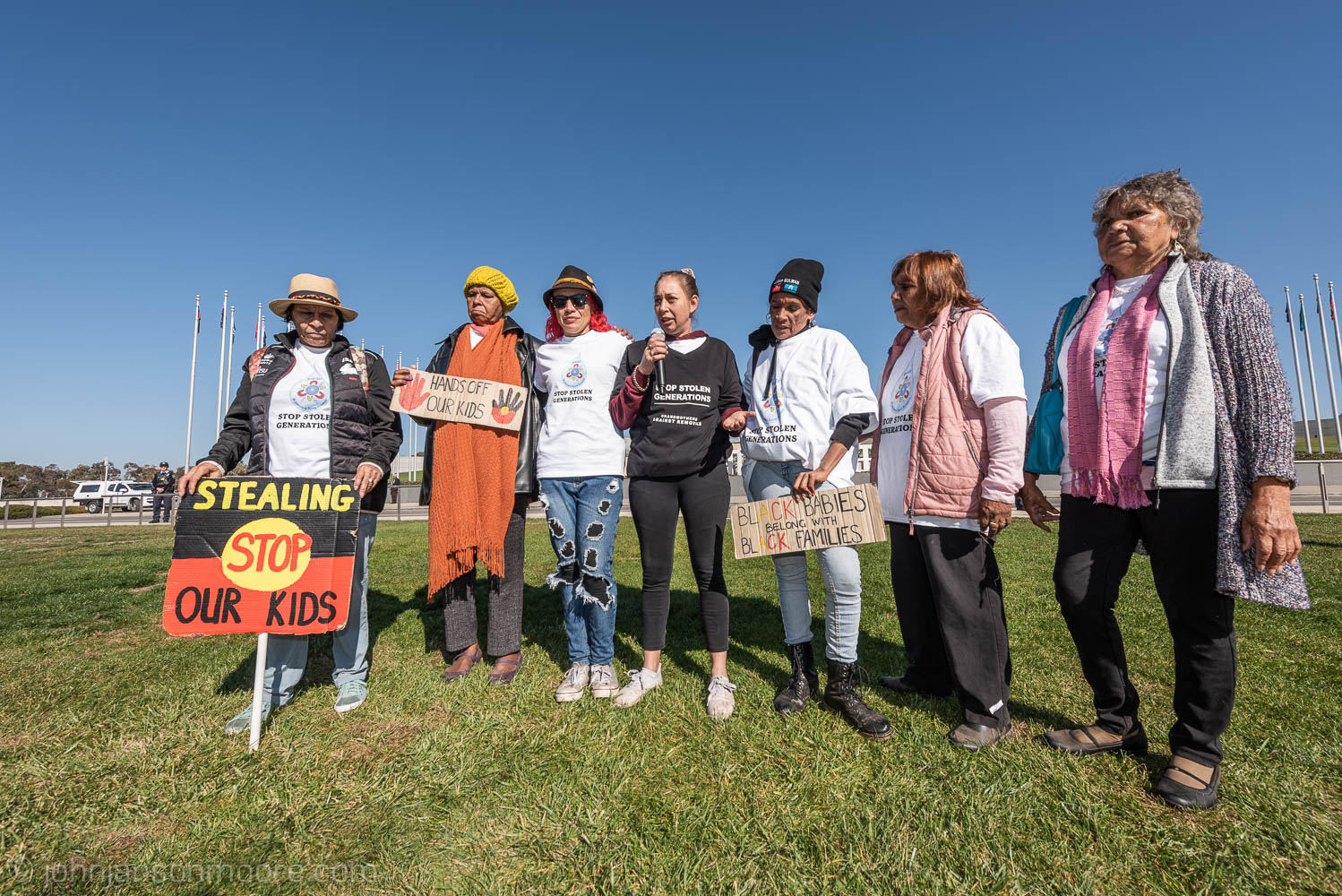
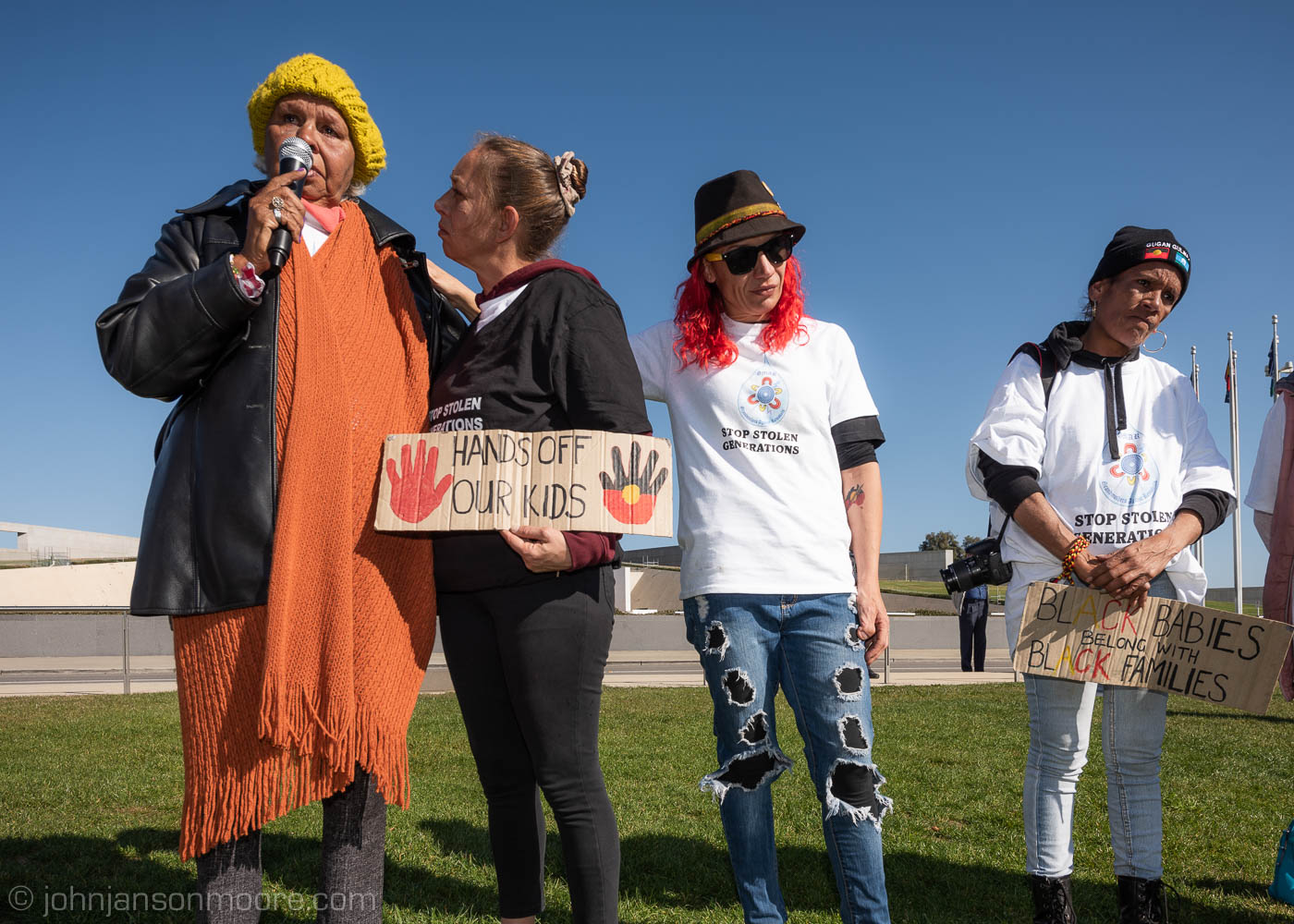
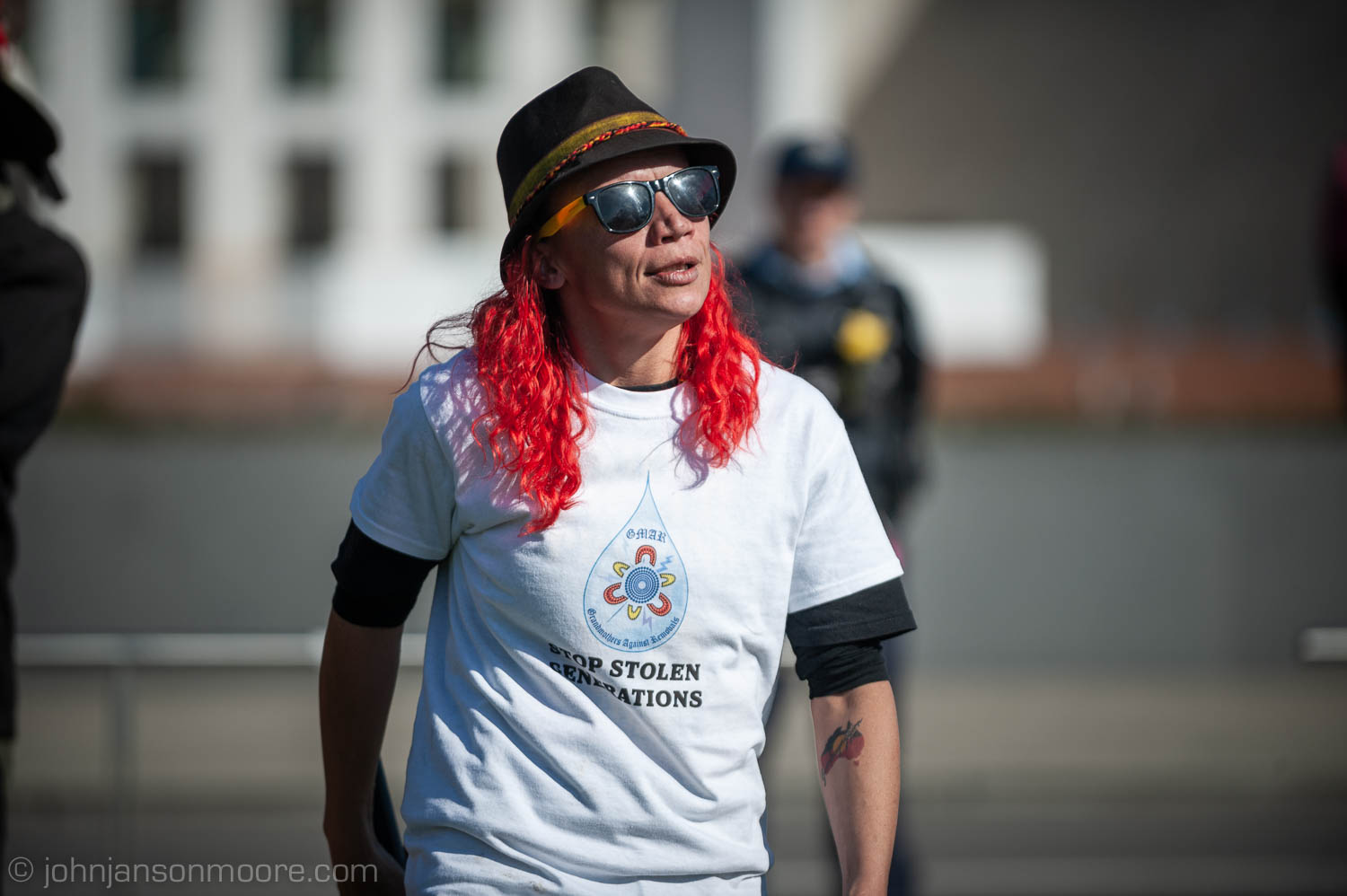
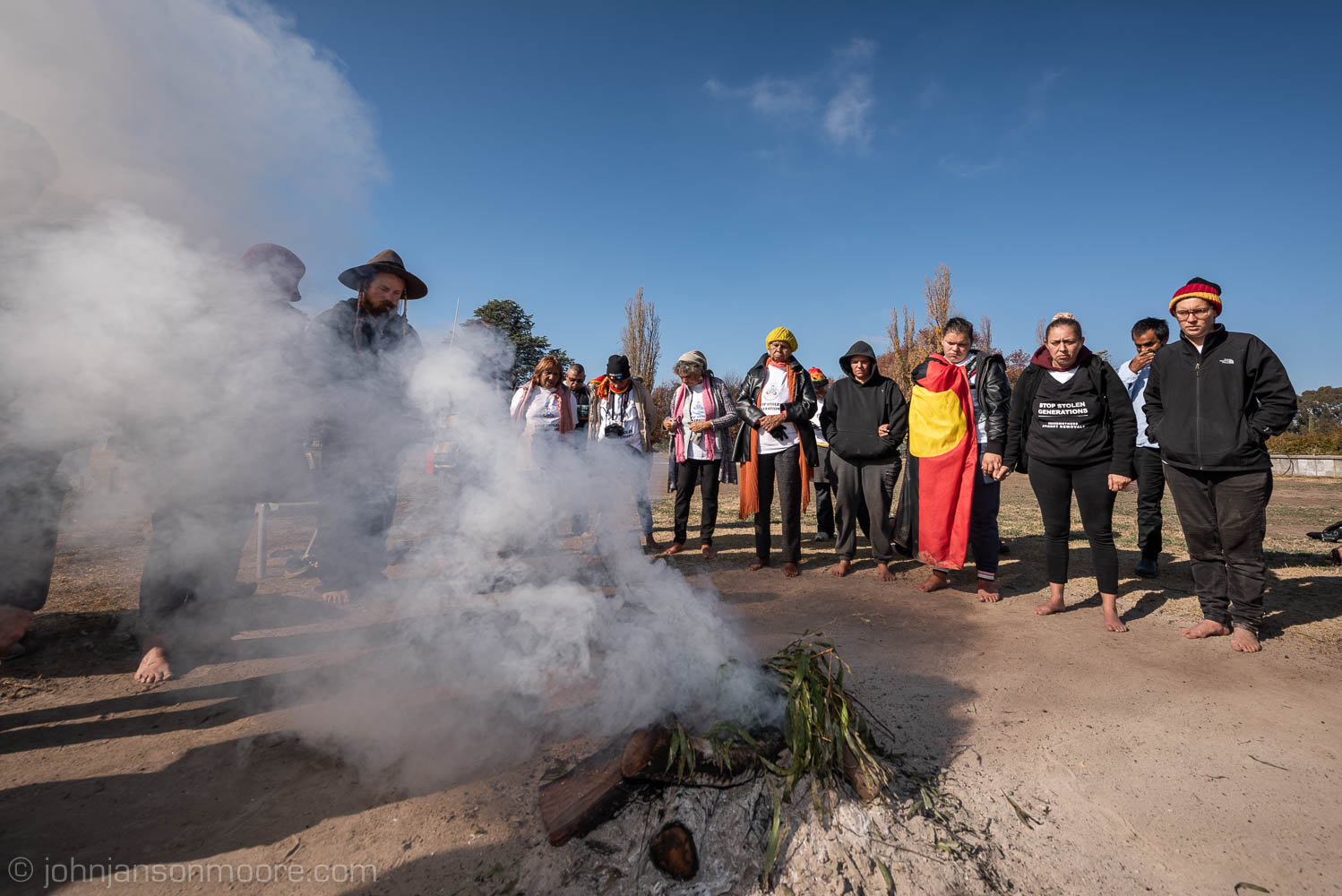
A national delegation from Grandmothers Against Removal (GMAR) gathered at the Aboriginal Tent Embassy in Canberra last week to demand the government halt the systematic removal of Aboriginal children from their families.

This year marks the 10th anniversary of Kevin Rudd's 'Apology' to the Stolen Generation. The GMAR delegation insists that today's government-led child removal program is a continuation of that Stolen Generation - in effect, that the process of discriminating against Aboriginal families in regards to child removal has never ceased since at least the early part of last century.

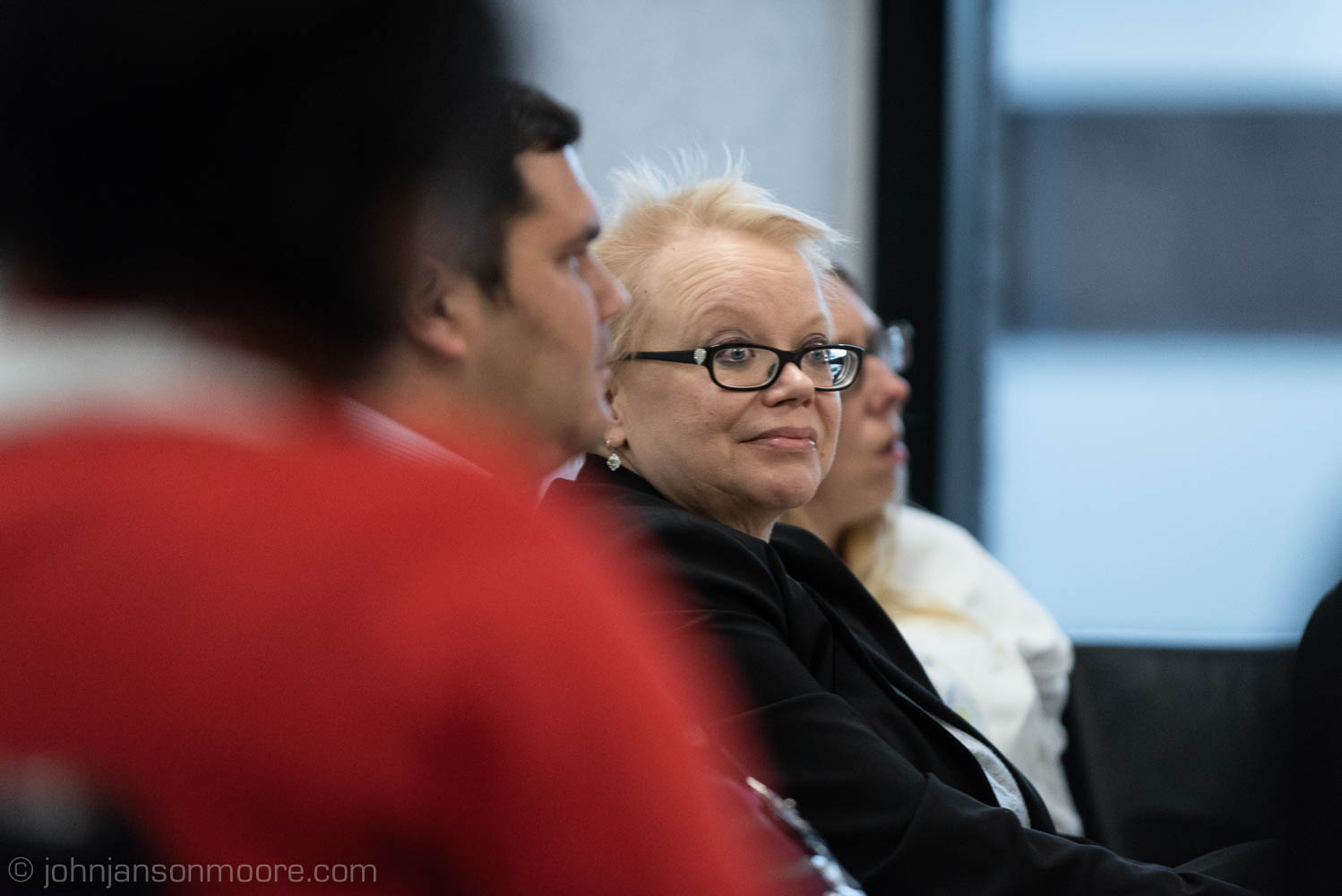
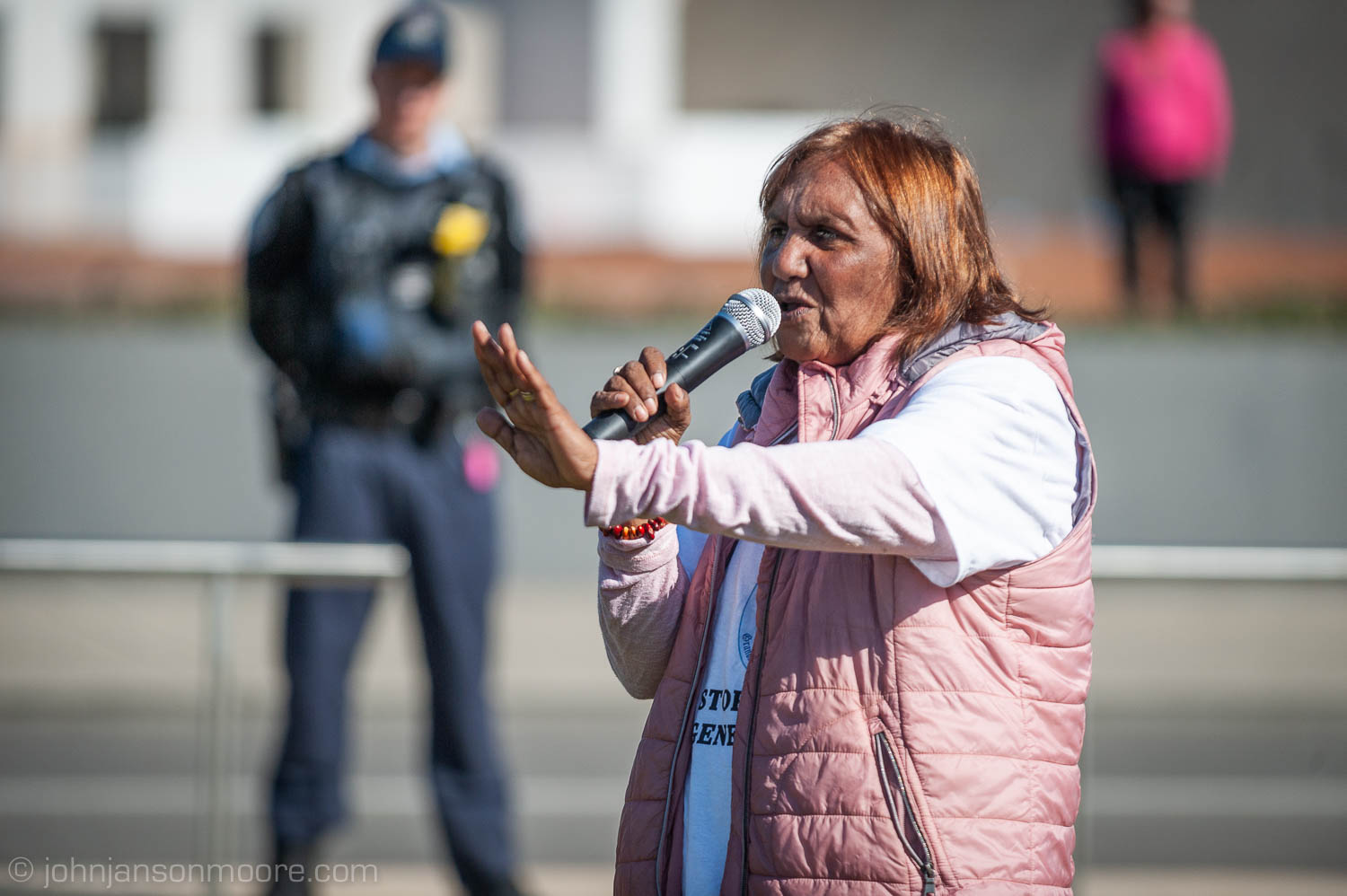
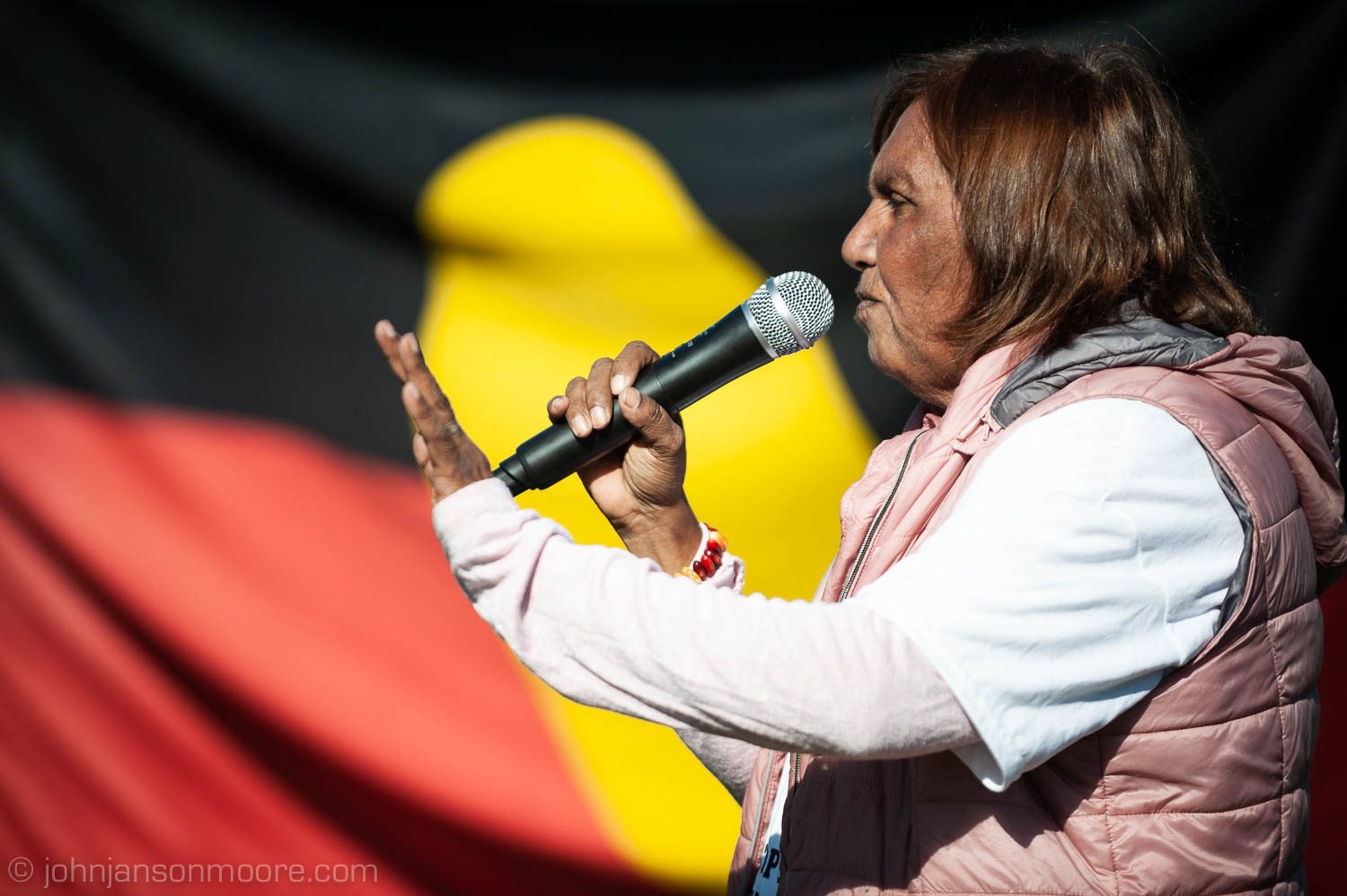
After presenting a list of demands to government ministers and opposition shadow ministers last Thursday, the visiting members of GMAR brokered a meeting with representatives from the Department of Prime Minister and Cabinet (PMC) on Friday. At that meeting, the grandmothers told personal, heartbreaking stories of having children taken by government agencies and demanded that Aboriginal communities be placed at the centre of decision making to resolve Aboriginal child welfare issues. The PMC representatives agreed to meet again in six months time.

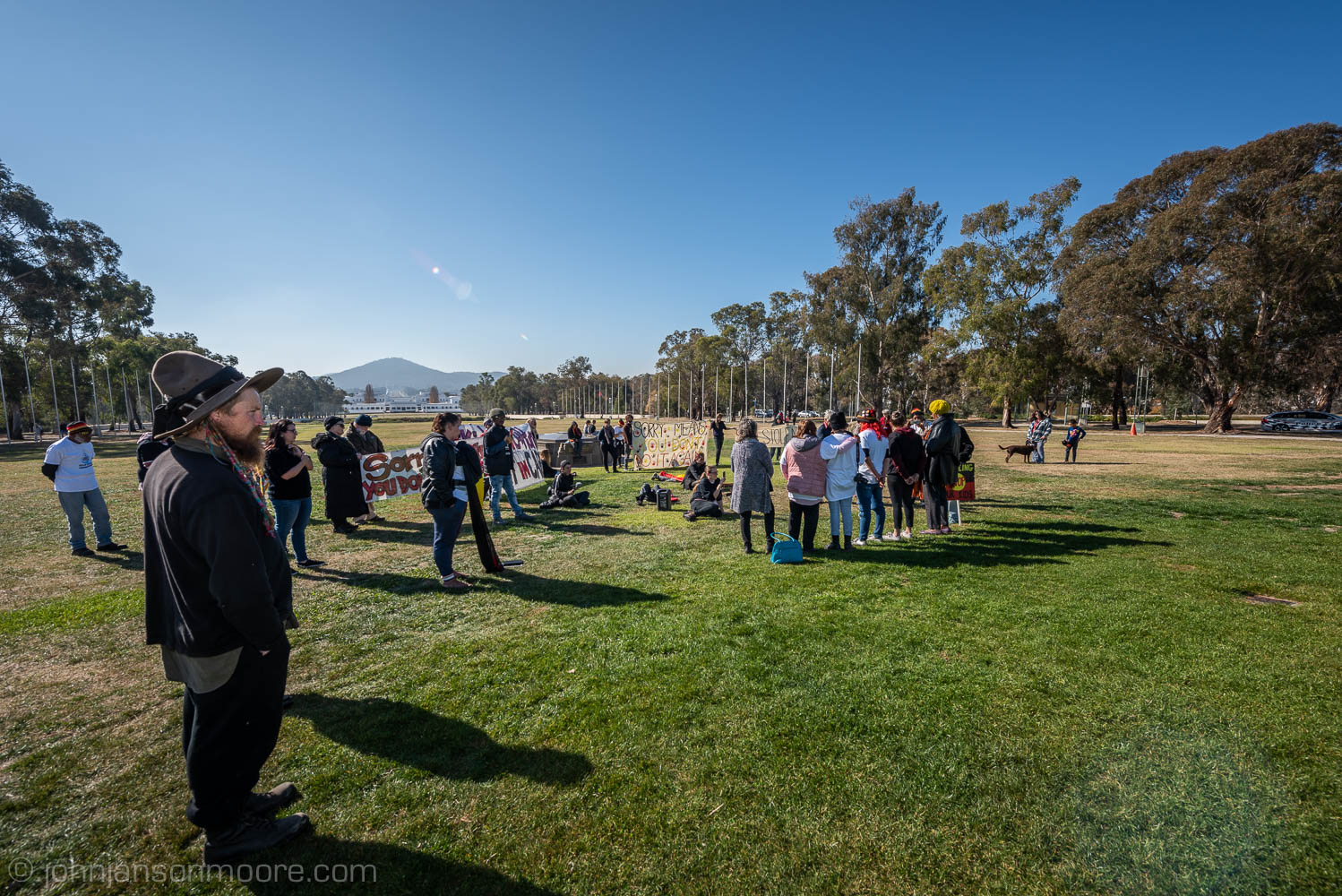
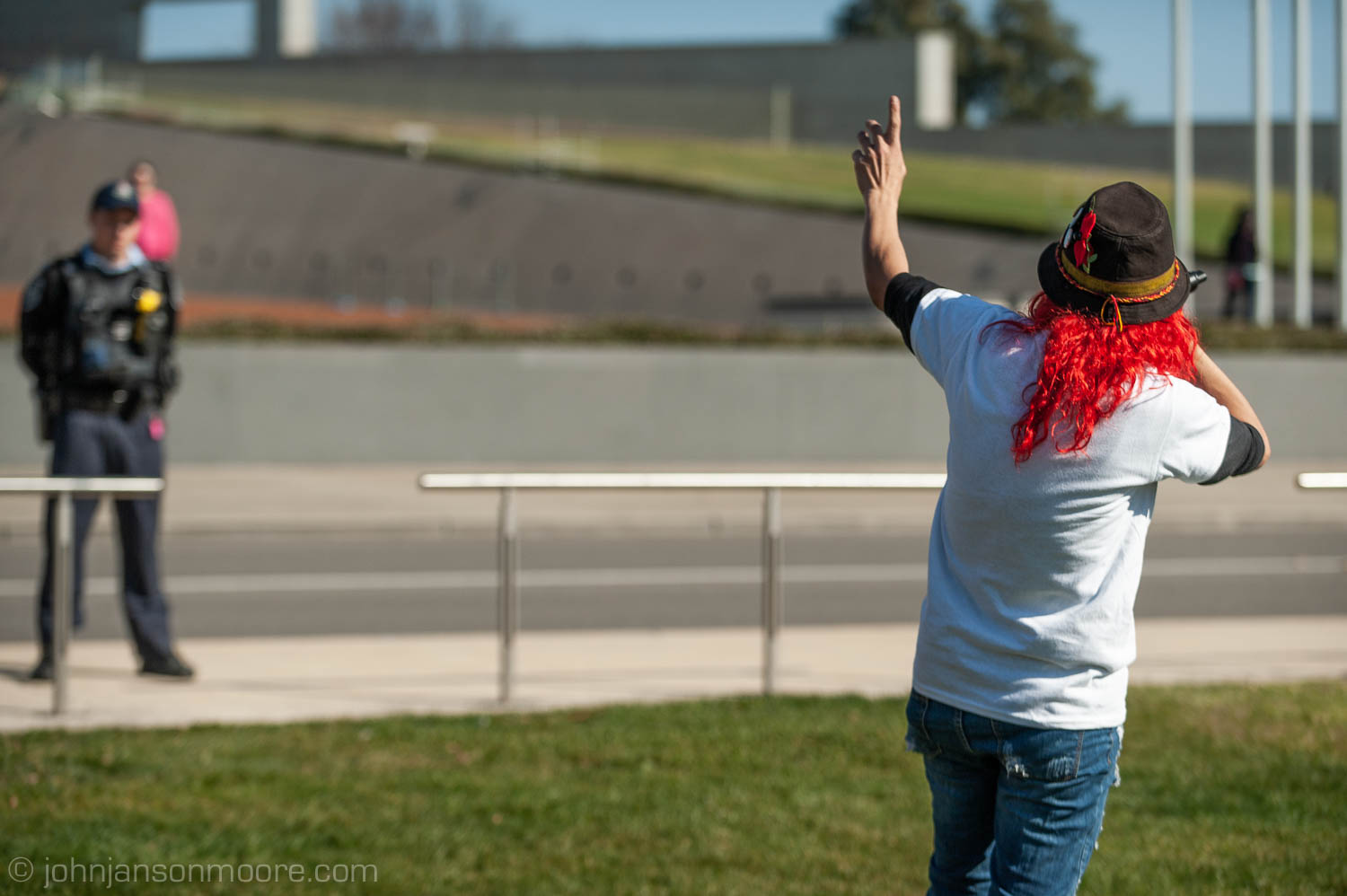
The following day, Saturday the 26th of May, was National Sorry Day - a day that marked the 21st anniversary of the Bringing Them Home Report into the Stolen Generation. The GMAR delegation gathered at the Aboriginal Tent Embassy and marched up to the lawns of Parliament House, where impassioned speeches were made.

*click through images for full screen view